Moats
What stops competitors from copying you and competing the margin away.
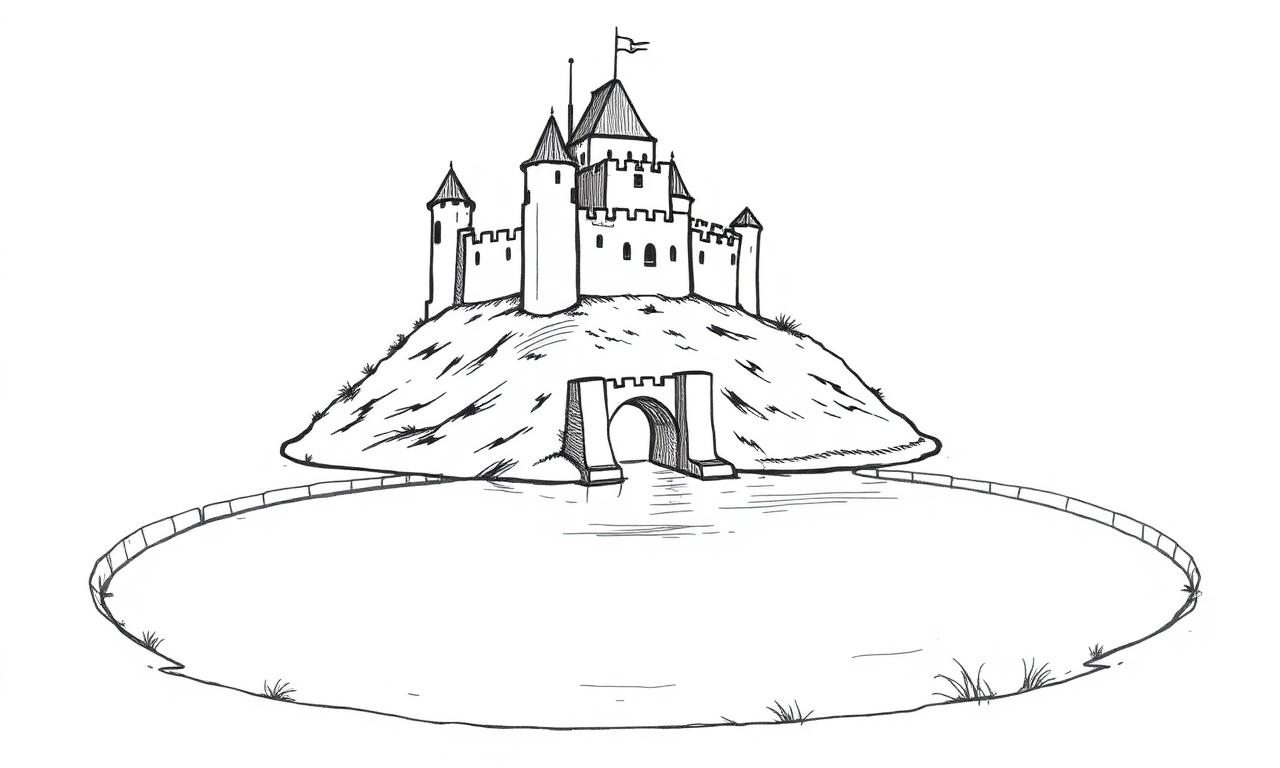
- What stops competitors from copying you and competing the margin away.
- Operating: Costco's combination of scale and member loyalty is a real moat.
- Investing: Buffett bought See's Candies in 1972 for $25M.
- Everyday life: The only mechanic in a small town has a tiny but very real moat.
Warren Buffett popularised the term in his 1986 letter to Berkshire shareholders, and it's still the cleanest way to think about why some businesses keep making money for decades while others get competed into the ground.
A moat is whatever protects a business from competition. Bigger moat, longer the business gets to earn returns above the cost of capital before someone catches up.
Most businesses don't actually have one. They're either selling a commodity (where price is the only lever) or operating somewhere the moat hasn't formed yet, and maybe never will.
The real ones tend to fall into a few buckets:
- Brand. Customers trust you and pay more, or stay longer, because of it. Apple, Coca-Cola, Hermès. Brand moats take decades to build and can erode in a few quarters.
- Scale. Your unit costs are structurally lower than anyone else's because you're so much bigger. Manufacturing, logistics, energy. Once a new entrant has to spend $1B+ just to start playing, you're protected.
- Network effects. The product gets better the more people use it. LinkedIn, WhatsApp, eBay.
- Switching costs. Customers can't easily leave even when they want to. SAP, Salesforce, most of your bank's customers.
- Regulation and IP. Patents, exclusive contracts, licences. Strong while they last; nothing forever.
A moat isn't permanent. Even Buffett's old examples (newspapers, encyclopedias) got eaten when the technology shifted. The honest question for any operator is: is my moat getting wider or narrower this year? If you can't tell, it's probably narrower.
Two things often get mistaken for moats but aren't. One is being first (that's a head start, not a moat). The other is being big in a market where size doesn't actually lower your unit cost (that's just being big).
Examples in the wild
Costco's combination of scale and member loyalty is a real moat. A new warehouse-club chain would have to burn cash for a decade to maybe catch up.
Buffett bought See's Candies in 1972 for $25M. It has generated billions in cash since because the brand moat held. He's said publicly he'd never buy a steel mill, no matter how cheap. No moat.
The only mechanic in a small town has a tiny but very real moat. The same mechanic in central Stockholm has none.
Moats is one of the mental models we apply through real cases inside the Pareto MBA — a part-time program for professionals who want to think clearly about business.