Supply and demand
Price emerges where competing scarcities meet.
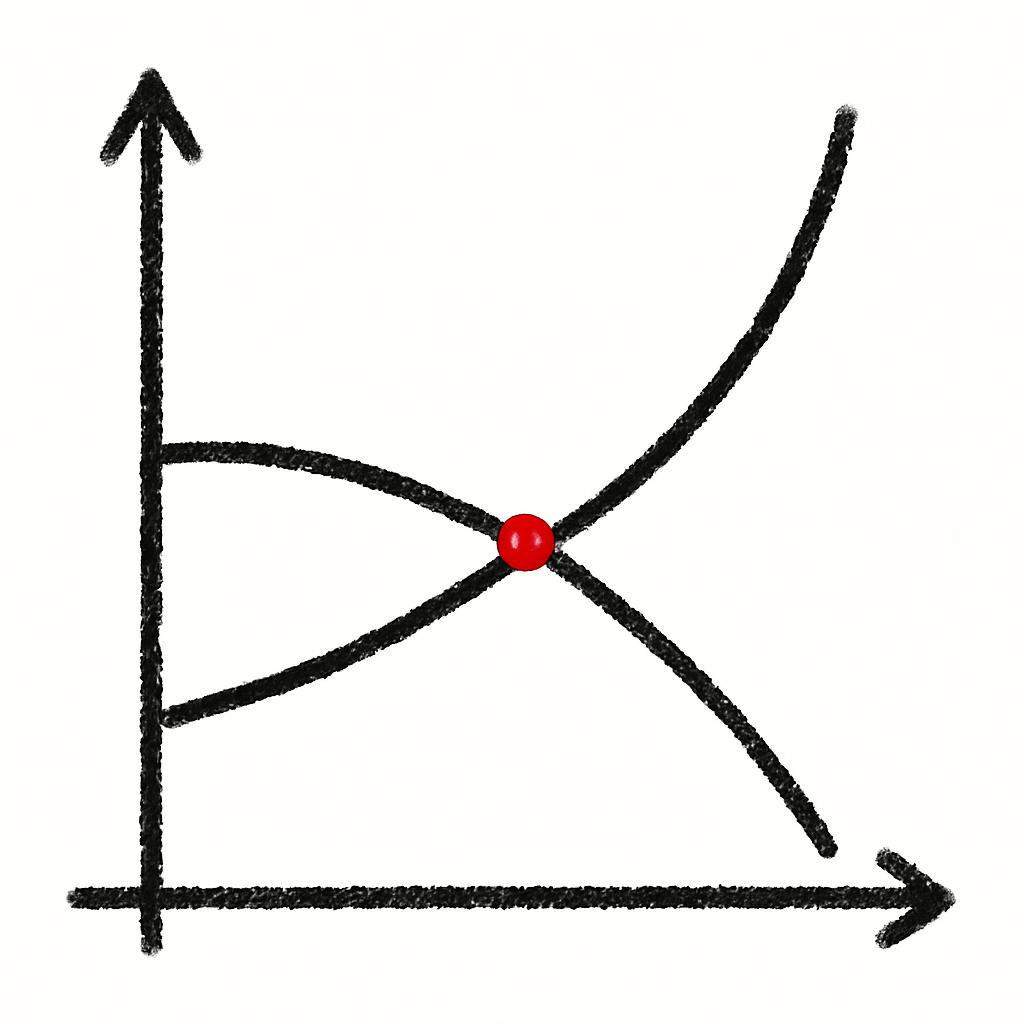
The foundational economic model. Supply (how much sellers will offer at each price) and demand (how much buyers will take at each price) interact to set prices. Shortage produces rising prices; surplus produces falling ones. The system tends toward equilibrium.
The model is taught in introductory courses but underused in practice. Many strategic decisions ignore the supply-demand response. "We'll lower prices to gain share" ignores how competitors will respond to the new supply. "We'll raise prices to fund growth" ignores how demand will shift.
For operators, the discipline is to always model both sides. Whatever you do to one side, the other will respond. The new equilibrium, not your initial move, is what determines the outcome.
Examples in the wild
Most price increases produce some demand loss. The model question isn't "will demand drop" but "by how much, and at what point does revenue start falling." Most companies don't model this honestly.
Commodity boom-bust cycles are pure supply-demand dynamics. High prices attract new supply (oil rigs, lithium mines), which then crashes prices, which kills the new supply, which raises prices again.
Salary markets in any specific role are supply-demand equilibria. Knowing the curve in your specialty matters more than your individual negotiating skill.
Supply and demand is one of the mental models we apply through real cases inside the Pareto MBA — a part-time program for professionals who want to think clearly about business.