Equilibrium
Systems settle where opposing forces balance.
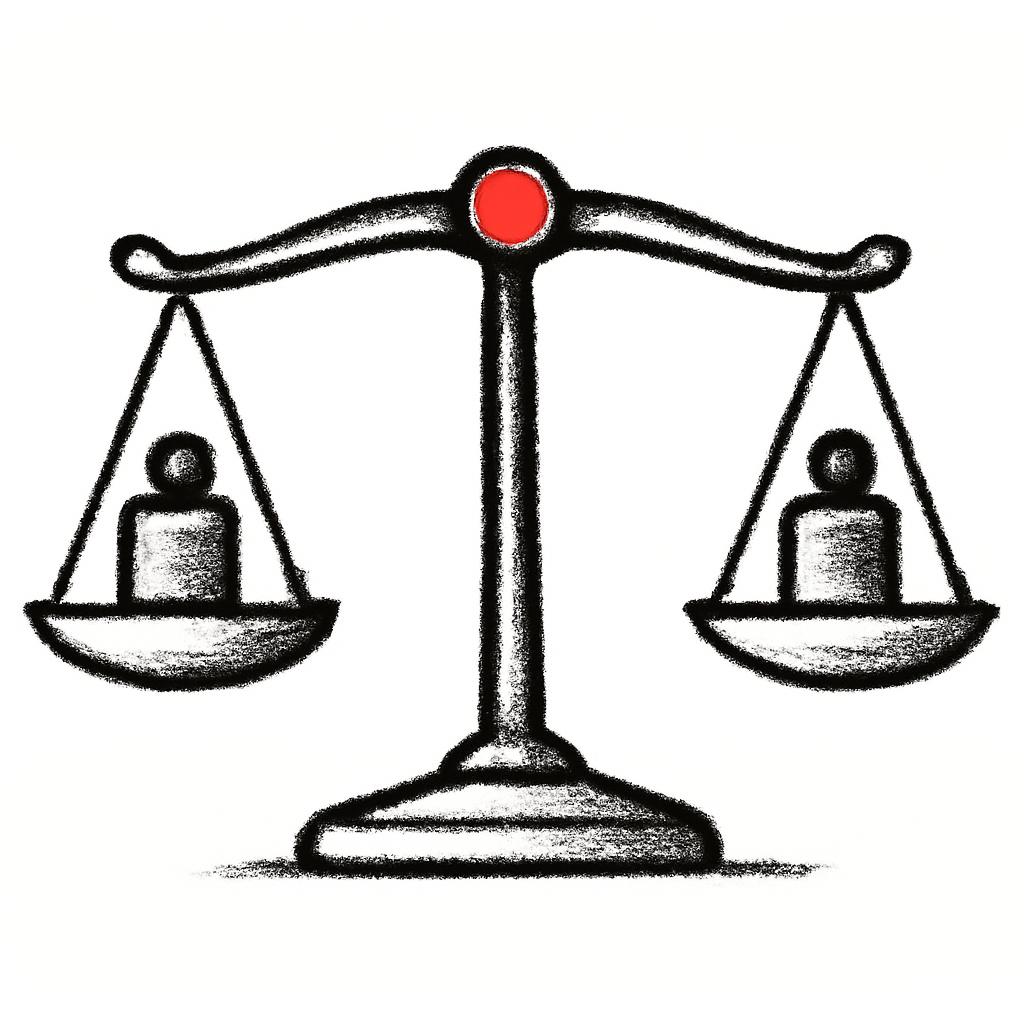
An equilibrium is the state a system settles into when opposing forces are balanced. Disturb one of the forces and the system moves to a new equilibrium where the new balance holds. The mathematics applies to mechanical systems, chemical reactions, market prices, social norms.
For operators, the lens matters when changing anything in a complex system. You're not setting a new state; you're changing one of the forces. The system will re-settle, but not necessarily where you intended. The new equilibrium depends on all the other forces too.
The trap is assuming linear cause-and-effect. "If we increase the bonus by 10%, performance will go up 10%." Sometimes. Usually the new equilibrium involves the team adjusting their effort, expectations, and norms in ways the simple model didn't capture.
Examples in the wild
Workforce policies often produce unexpected equilibrium shifts. Raising junior pay by 20% typically pushes senior demands up by 15%, restoring the relative differential at a higher absolute cost.
Market prices are equilibrium states. Move one force (regulation, interest rates, supply) and the new equilibrium emerges, often after a violent transition.
Relationships have invisible equilibrium points around effort, attention, money, time. Disturb one without compensating the others and the whole thing re-balances, sometimes badly.
Equilibrium is one of the mental models we apply through real cases inside the Pareto MBA — a part-time program for professionals who want to think clearly about business.