Schelling points
Solutions people coordinate on without communicating.
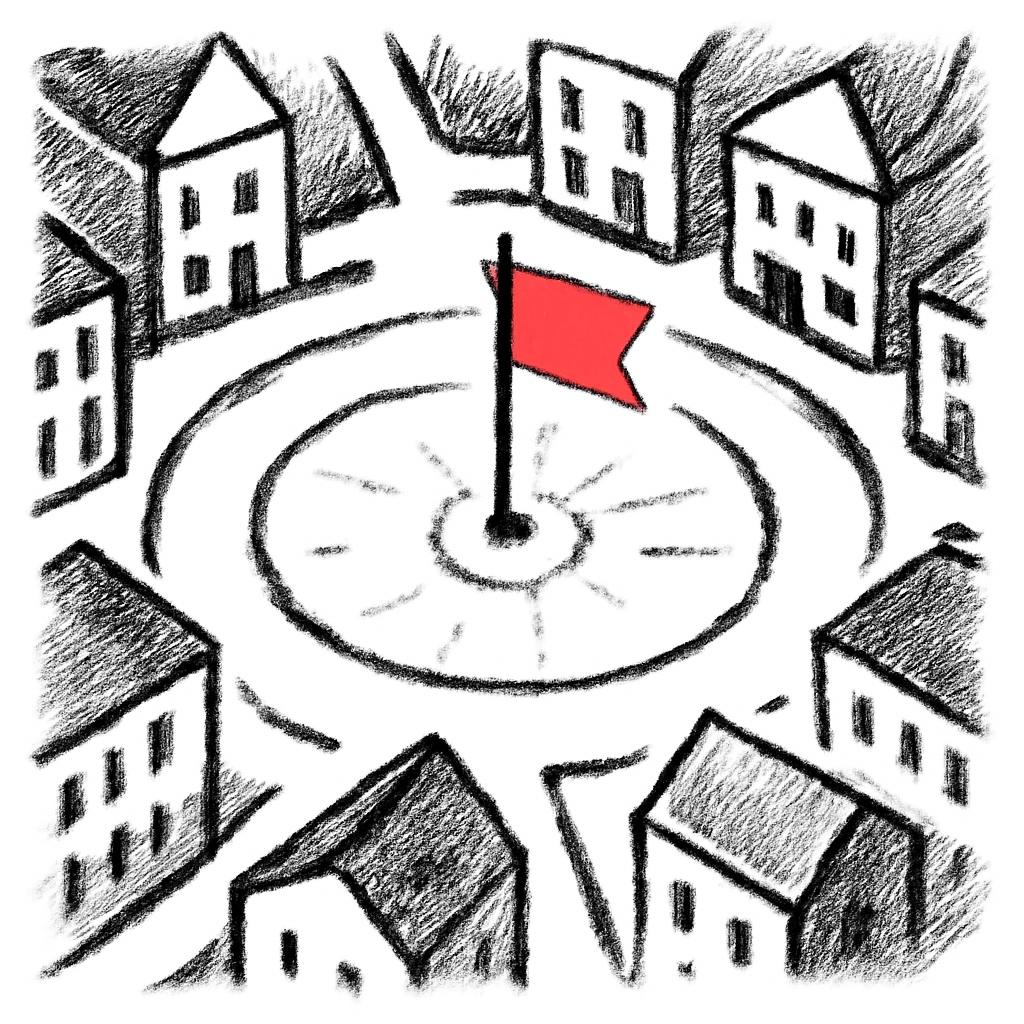
Thomas Schelling, Nobel laureate. The puzzle: if you and a stranger have to meet in New York tomorrow and can't communicate, where do you go? Grand Central Terminal at noon. Most people independently converge on it. The location has no special reason to be the answer except that it's the obvious answer to most people.
Schelling points are the implicit coordination solutions that human groups find without explicit communication. They underlie norms, traditions, default settings, and any case where multiple parties have to coordinate without a leader.
For operators, the principle matters when designing defaults (whatever you default to becomes the Schelling point and most people stick with it), when setting norms (focal options become focal whether you intend them to or not), and when negotiating (round numbers act as Schelling points and disproportionately influence outcomes).
Examples in the wild
Default settings in software are Schelling points. The default privacy setting, default sharing setting, default notification setting all influence behaviour for the vast majority of users.
Round numbers act as Schelling points in markets. The S&P 500 at 4,000. Bitcoin at $50,000. These become focal not because of fundamentals but because everyone uses them.
Meeting times default to round numbers (3:00, not 3:07). Holidays default to specific dates. Tipping defaults to 15%, 18%, 20%. Each is a Schelling point that simplifies coordination.
Schelling points is one of the mental models we apply through real cases inside the Pareto MBA — a part-time program for professionals who want to think clearly about business.