Social-proof tendency
When uncertain, copy the herd. Automatic and strongest under stress.
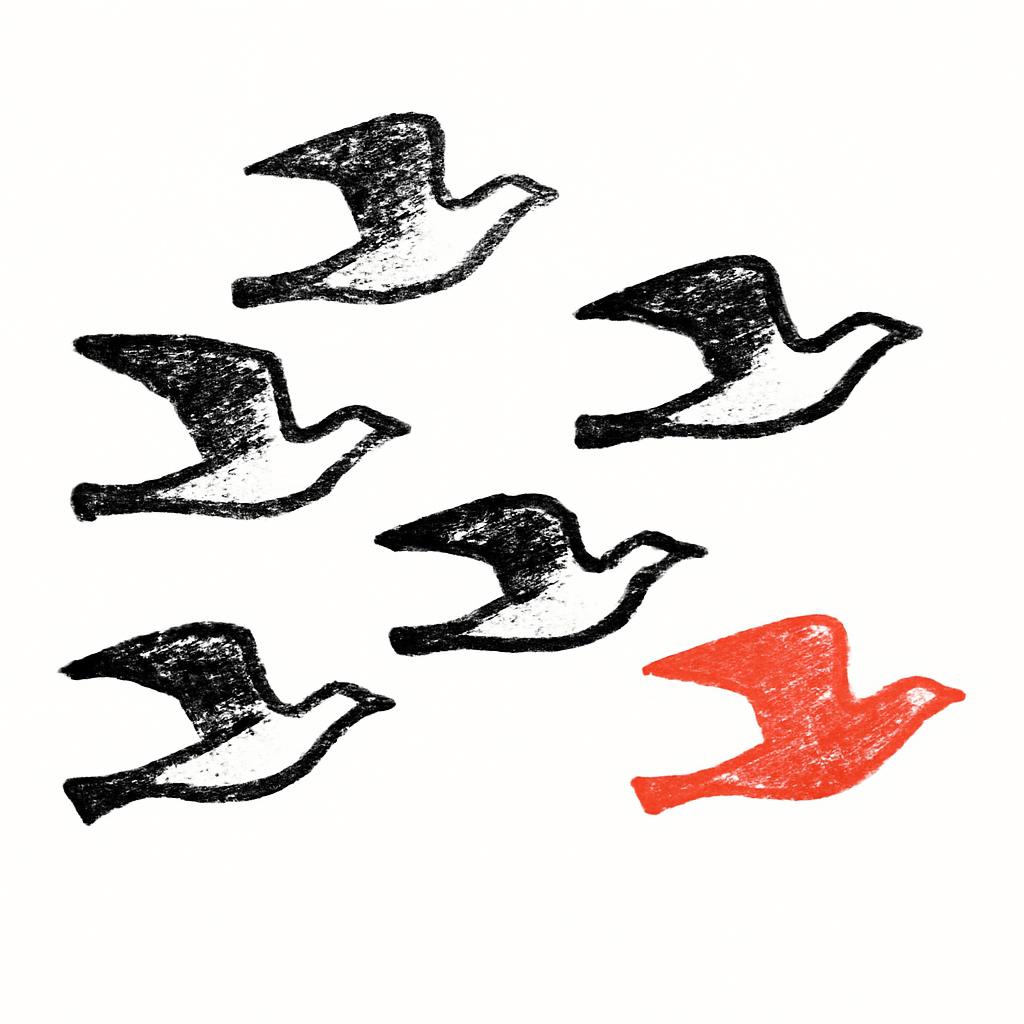
Cialdini's principle: when we don't know what to do, we look at what other people are doing and copy them. The mechanism is mostly useful (most of the time, the herd has information you don't). It's also exploitable, and it's strongest exactly when other thinking is hardest, that is, under stress, time pressure, or genuine uncertainty.
In business, social proof drives almost all hype cycles, technology adoption, and consumer trends. It also drives organisational decisions: "the other big companies are doing X" is one of the most common reasons committees do X.
The defence is to deliberately ask, when you find yourself following the herd: "would I do this if no one else were?" If the answer is no, you're being driven by social proof, not by your own analysis.
Examples in the wild
M&A waves are largely social proof. Once one big competitor makes a major acquisition, the others feel compelled to. Most of these wave-driven deals destroy value.
Crowded trades are social proof at its worst. Smart money sees that other smart money is in, so they pile in too. Prices detach from fundamentals. The reversal is brutal.
Fashion, restaurants, baby names, even what we believe about politics or science: far more of it is social proof than we want to admit.
Social-proof tendency is one of the mental models we apply through real cases inside the Pareto MBA — a part-time program for professionals who want to think clearly about business.