The two-front war
Splitting forces across simultaneous conflicts weakens you on both. Avoid it, or force it on your rival.
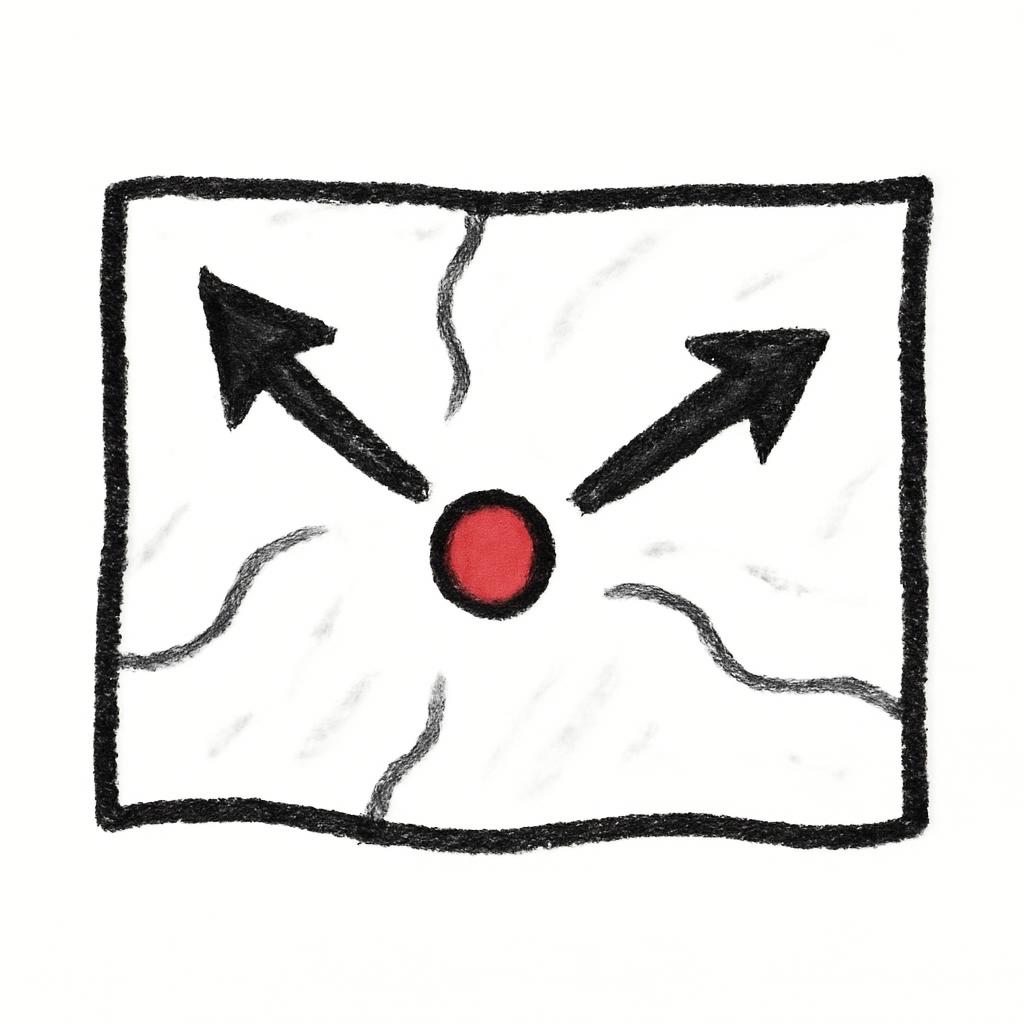
A military axiom: fighting two enemies at once is much worse than fighting one then the other. Resources, attention, and morale split unevenly across multiple fronts. Germany's two-front war in both world wars is the textbook example of the trap.
For operators, two-front wars are everywhere and rarely chosen deliberately. Companies fighting incumbents AND new entrants. Founders managing investors AND building a product AND running operations. Executives fighting internal politics AND external competition.
The discipline is to pick one front at a time when possible, or to negotiate a temporary peace on one front to focus on another. Most strategic failures are two-front wars that were never explicitly identified as such.
Examples in the wild
Companies trying to compete in two adjacent markets simultaneously usually do both poorly. Picking one to dominate first, then expanding, is the more reliable pattern.
Hedge funds running multiple unrelated strategies (long-short equity AND distressed debt AND emerging markets) often underperform single-strategy peers. The focus matters.
Career and family disputes happening simultaneously almost always go worse than either alone. Negotiating peace on one front, even temporarily, lets you handle the other.
The two-front war is one of the mental models we apply through real cases inside the Pareto MBA — a part-time program for professionals who want to think clearly about business.