Reason-respecting tendency
We comply more when given a reason. Even a meaningless one.
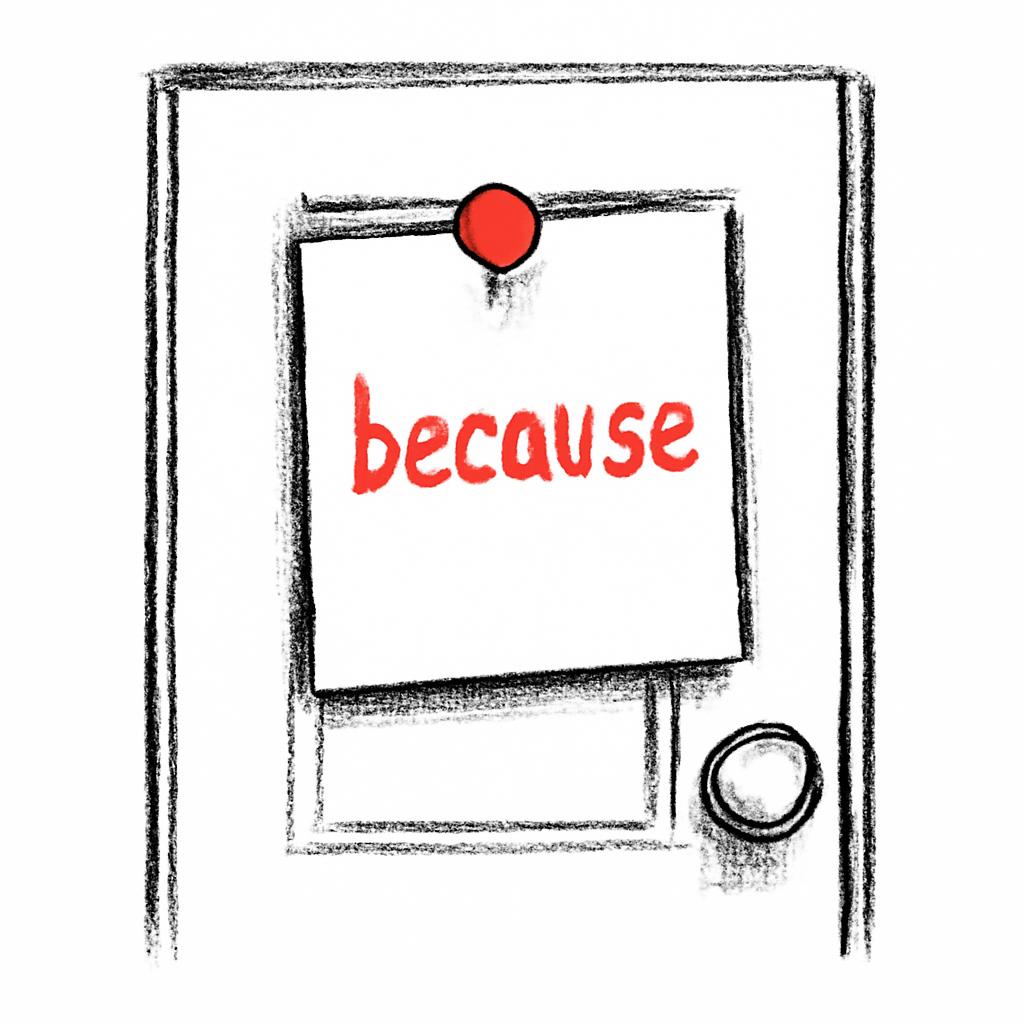
Robert Cialdini's famous photocopier experiment. Researchers tried to cut a queue. "Can I use the photocopier?" produced 60% compliance. "Can I use the photocopier, because I'm in a rush?" produced 94%. "Can I use the photocopier, because I need to make copies?" also produced 94%. The reason didn't even need to be a real reason. Just having any reason attached doubled compliance.
The mechanism: humans are wired to respond to the word "because." The reason functions almost mechanically, regardless of its content. Most of the time this is fine. Most of the time there's a real reason behind the "because." But the instinct doesn't distinguish.
For operators: when you want compliance, give a reason. Any reason. The compliance is much higher than with a bare request. And when you're on the receiving end, notice when you're complying because a real reason was given versus because someone said "because." Often it's the latter.
Examples in the wild
Email requests that explain why get answered more than requests that don't, even when the reason is trivial. Just adding context dramatically lifts response rates.
Activist investors often win because they provide reasons (well-articulated investment theses). Their proposals get traction over the silent majority of shareholders, even when the reasons are weak.
Parents giving children reasons for rules get more compliance than parents who don't, even when children can't really evaluate the reasons. The word 'because' is part of how authority works.
Reason-respecting tendency is one of the mental models we apply through real cases inside the Pareto MBA — a part-time program for professionals who want to think clearly about business.