Moloch and multipolar traps
Coordination failures where every individually-rational move worsens the collective outcome.
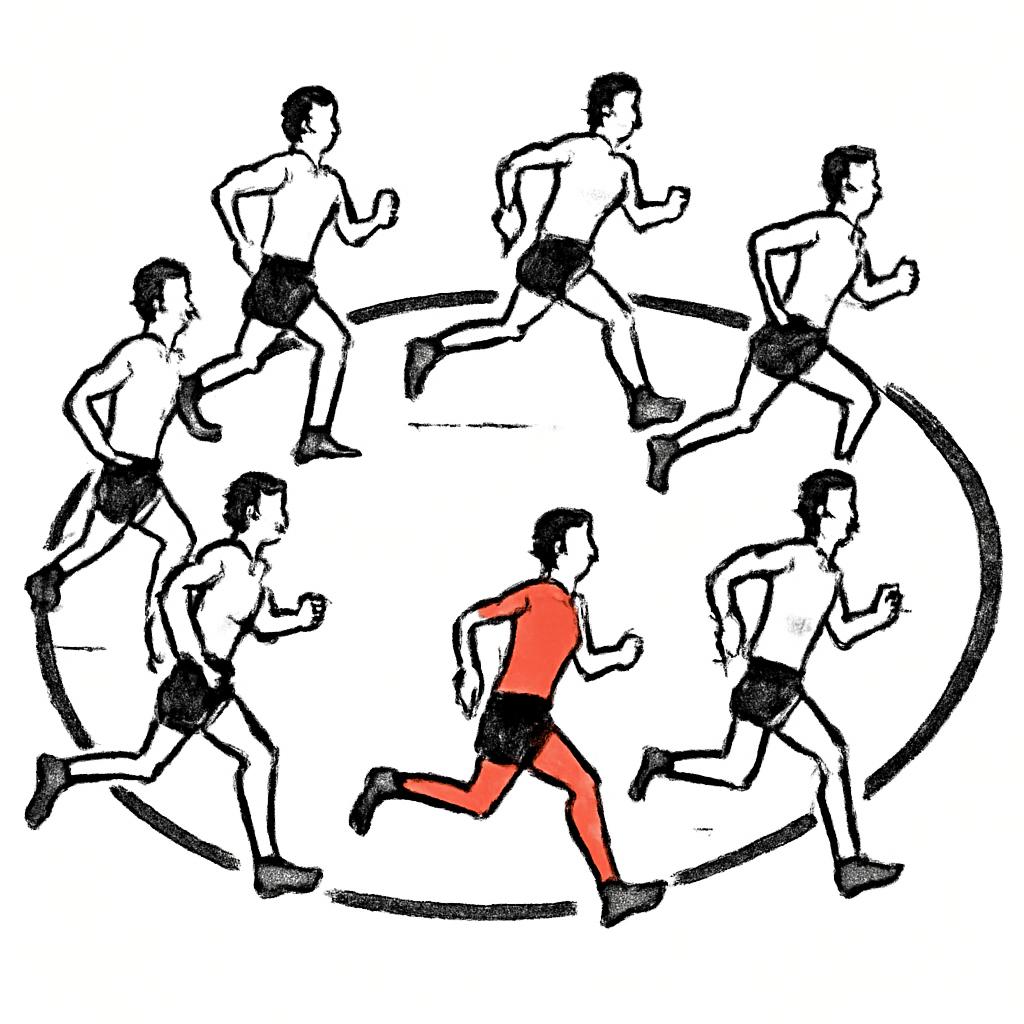
Ginsberg's poem invoked Moloch as the god of mindless competitive value-destruction. Scott Alexander built a famous essay around this. The pattern: a multi-player competitive system where each player must keep racing harder to avoid falling behind, even though everyone would be better off if they all slowed down. No single player can defect from the race without losing.
Examples: arms races, social media engagement competition, college admissions arms races, sports doping. In each case, the participants would prefer a less destructive equilibrium and can't unilaterally produce it.
For operators, the principle is darker than the prisoner's dilemma. Multipolar traps don't resolve through repeated games or cooperation; they often require external coordination (regulation, social norms, industry compacts) to break.
Examples in the wild
Industries that race to ever-more-aggressive growth practices (loss-leading customer acquisition, ever-cheaper unit pricing) often produce a Moloch dynamic. Everyone loses; no one can unilaterally stop.
Quarterly earnings management is a multipolar trap. Companies would prefer to focus long-term; the market punishes any that do unilaterally.
Phone usage in shared spaces is multipolar. Everyone would prefer less of it; no one can unilaterally put theirs away without missing the social signals.
Moloch and multipolar traps is one of the mental models we apply through real cases inside the Pareto MBA — a part-time program for professionals who want to think clearly about business.