The ludic fallacy
Mistaking the tidy randomness of games for the wild randomness of life.
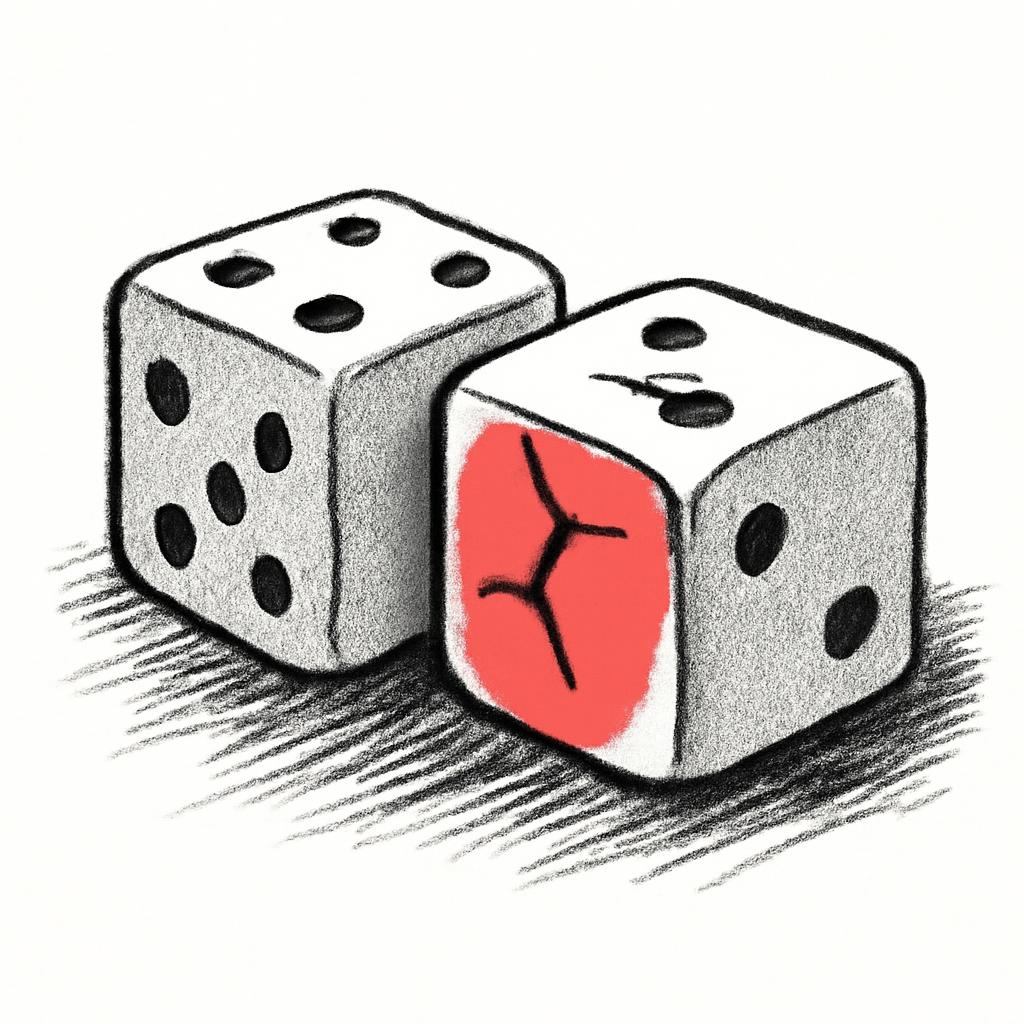
A casino is a tidy randomness. The dice are calibrated, the rules are explicit, the payoffs are known. Mathematics works perfectly. Life isn't like that. The probabilities aren't really known. The payoffs aren't bounded. The rules can change mid-game.
The ludic fallacy is treating real-world risk as if it were casino risk. Most of formal finance (efficient markets, Black-Scholes options pricing, Value at Risk) commits this fallacy. The math is beautiful and the underlying assumption about randomness is wrong.
For operators, the warning is to be skeptical of models that assume too much regularity. Real-world randomness is wilder, fatter-tailed, and more surprising than the casino version. Plan for variance you can't model precisely.
Examples in the wild
Most corporate risk models assume tidy distributions. Real risk events (pandemics, supply-chain shocks, geopolitical breaks) don't fit those models, which is why companies are repeatedly surprised.
Value-at-Risk models in finance famously underestimated catastrophic events leading up to 2008. The math worked on the assumed distribution; the actual distribution was different.
Planning a career as if the future is like the past is ludic thinking. Career-defining events (new technologies, layoffs, sudden opportunities) don't follow the tidy model.
The ludic fallacy is one of the mental models we apply through real cases inside the Pareto MBA — a part-time program for professionals who want to think clearly about business.