Gresham's Law
Bad money drives out good. Low-quality versions dominate when they're treated as equivalent.
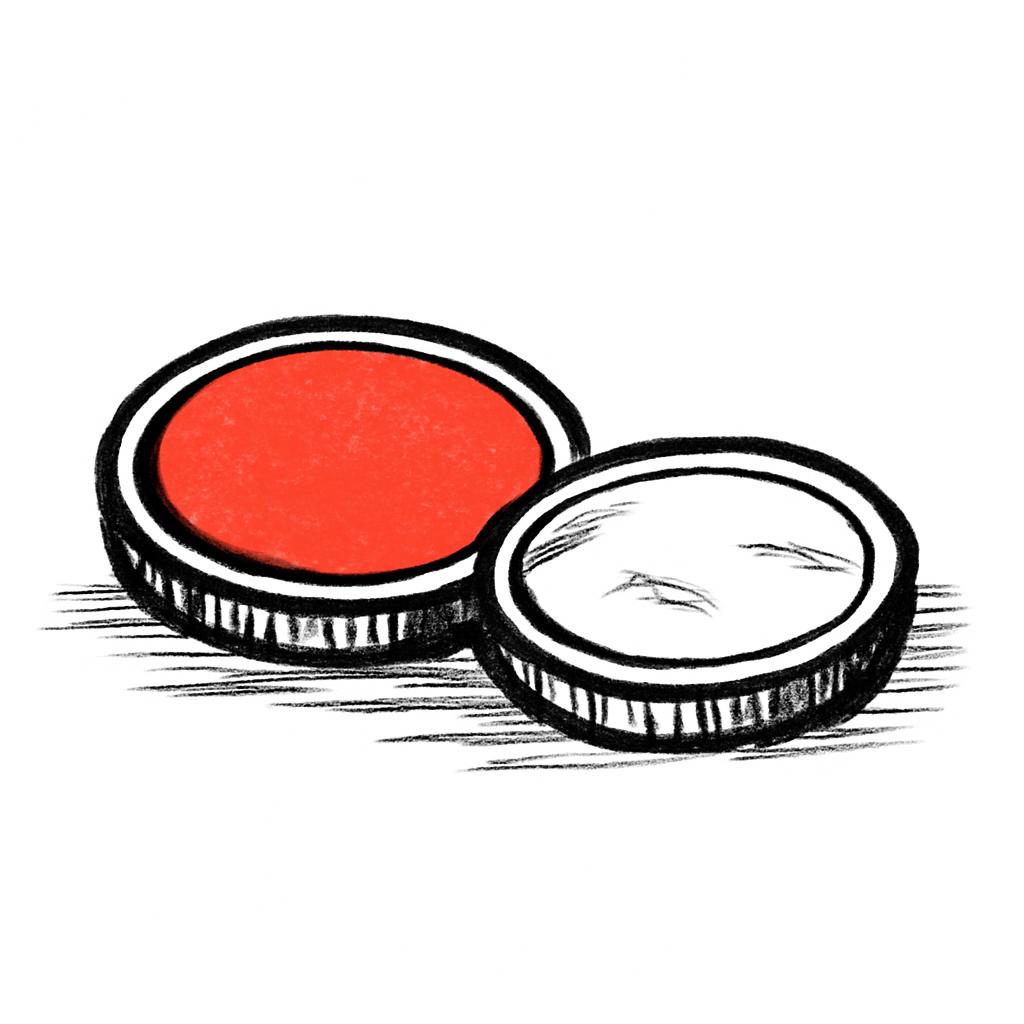
Originally about coins. When two coins (one of pure silver, one debased) circulate at the same nominal value, people hoard the good one and spend the bad one. Bad money drives good money out of circulation.
The principle generalises. Where low and high quality versions of something are treated as equivalent, the low quality version wins. Bad practices drive out good. Fraudulent science crowds out real science. Cheap fakes crowd out genuine craft when buyers can't tell the difference.
For operators, Gresham's Law is a warning about evaluation. Wherever you can't distinguish high quality from low, you'll get more low quality. Markets, hiring, content, suppliers, all subject to the same dynamic. The fix is better evaluation, not better intentions.
Examples in the wild
Companies that can't distinguish high-quality work from low (because review processes are weak) gradually fill with mediocre work. The good people leave because their work isn't being recognised.
Asset bubbles often see fraudulent companies attract capital because investors can't easily distinguish them from legitimate ones at peak optimism. The frauds raise as much as the real businesses.
Online dating, online reviews, and many online marketplaces have Gresham dynamics. Lower-effort, more deceptive participants outcompete sincere ones when verification is weak.
Gresham's Law is one of the mental models we apply through real cases inside the Pareto MBA — a part-time program for professionals who want to think clearly about business.