The cobra effect
When the solution to a problem creates an incentive that makes the problem worse.
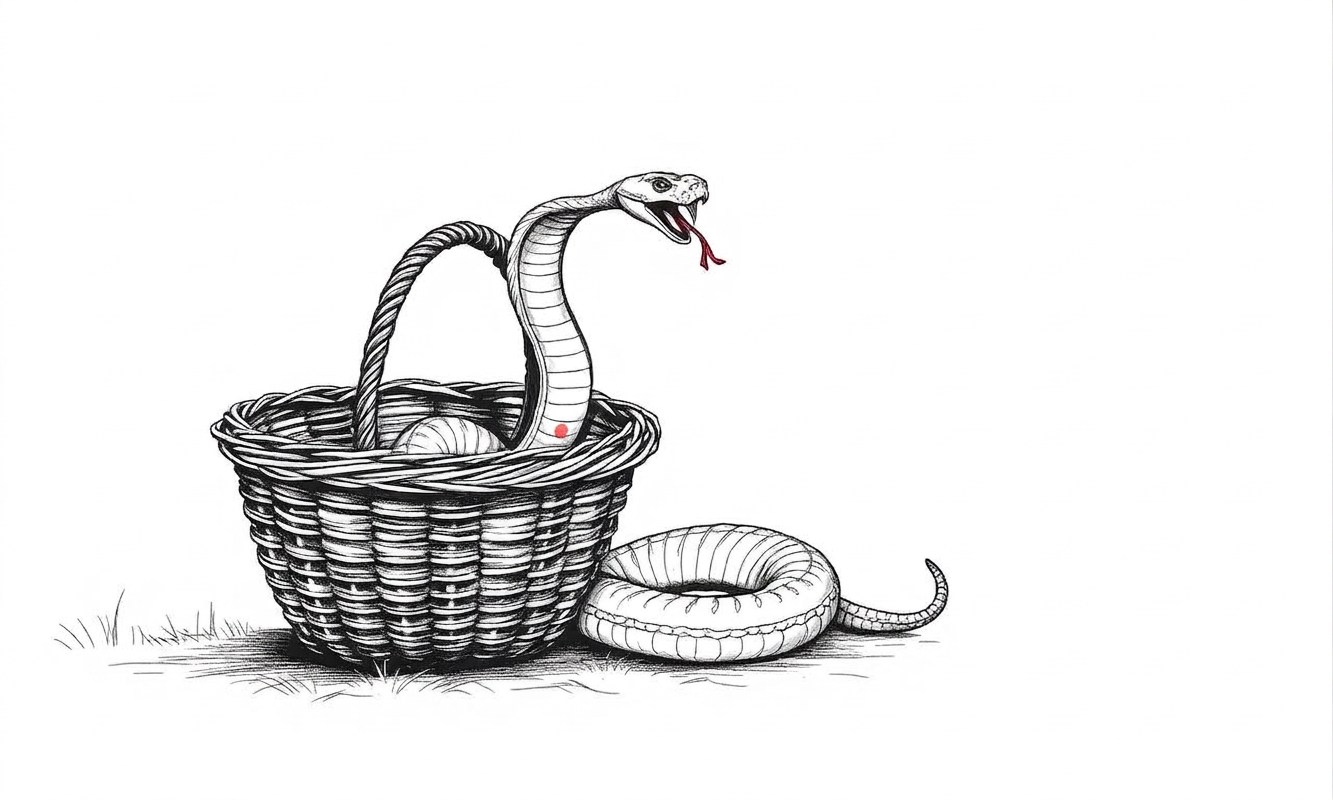
- When the solution to a problem creates an incentive that makes the problem worse.
- Operating: Companies that pay customer service teams for 'resolution speed' often see customers calling back angrier.
- Investing: SPAC sponsors got paid huge returns just for finding a target to merge with.
- Everyday life: A parent rewards a kid for picking up toys.
Under British colonial rule in India, the government was worried about the number of venomous cobras in Delhi. They offered a bounty for every dead cobra brought in.
It worked at first. The cobra population dropped. Then enterprising people started breeding cobras to collect the bounty. The government eventually figured out what was happening and ended the program. The breeders, now stuck with worthless cobras, released them into the wild. The cobra population ended up higher than when they started.
The cobra effect is what happens when an incentive designed to solve a problem ends up creating more of the problem.
This is everywhere once you look:
- Pay engineers per bug fixed → engineers introduce bugs to fix later
- Pay sales reps on revenue regardless of margin → reps slash prices to close anything
- Pay schools per high-scoring student → schools push low-scoring students to drop out
- Tax companies on declared profit → companies declare less profit
- Subsidise rooftop solar based on energy generated → solar installers add capacity in shadow
The cobra effect is closely related to Goodhart's Law (see [goodharts-law]), but it has a sharper twist. Goodhart says people game the metric. The cobra effect says people sometimes actively expand the underlying problem because the incentive rewards them for doing so.
Defences:
1. Before launching any incentive, ask: "What would I do if I wanted to maximise my reward from this system?" If the answer involves expanding the problem, redesign. 2. Pay for outcomes, not for activity or problem-solving effort. A bounty per dead cobra rewards dead cobras. A bounty per cobra-free street rewards a cobra-free city. 3. Make incentive programs reversible and time-bound. You'll need to adjust as people figure out the angles. 4. Watch for the people who benefit disproportionately. They're often the ones who've figured out how to expand the problem.
The most expensive cobra effects don't look obvious upfront. They usually come from well-intentioned incentives that nobody stress-tested against people optimising aggressively against them.
Examples in the wild
Companies that pay customer service teams for 'resolution speed' often see customers calling back angrier. Tickets close fast, but the underlying problem doesn't go away. Customers return. Total resolution time goes up.
SPAC sponsors got paid huge returns just for finding a target to merge with. Some sponsors found bad targets and walked away with their fees while public investors got stuck with the merged cobra. The incentive rewarded sponsorship of bad deals.
A parent rewards a kid for picking up toys. The kid starts scattering toys around the house when no one's looking, then picking them up. The reward made the problem bigger, not smaller.
The cobra effect is one of the mental models we apply through real cases inside the Pareto MBA — a part-time program for professionals who want to think clearly about business.