Dunbar's number
Cognitive limits cap stable social relationships at around 150.
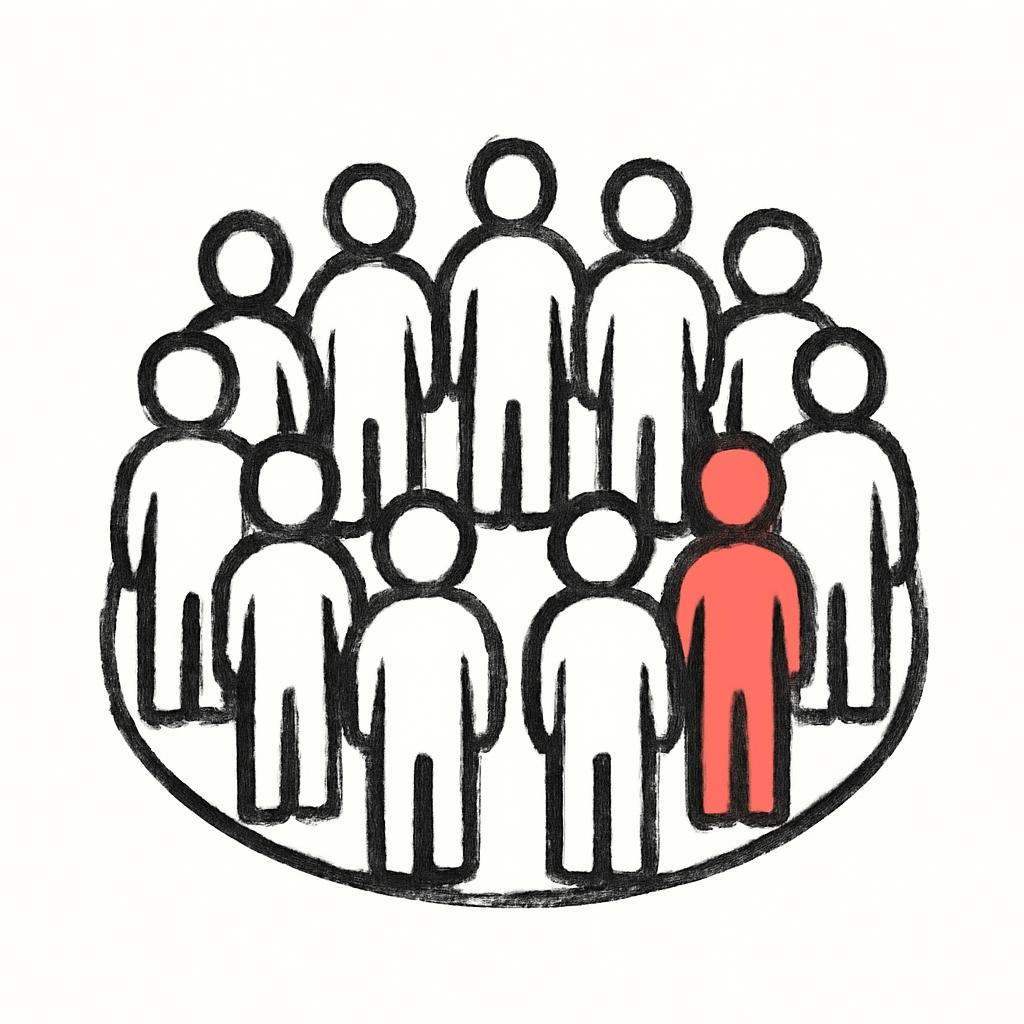
Anthropologist Robin Dunbar found that the size of an animal's neocortex predicts the size of its social group. For humans, the math suggests around 150 stable social relationships. Hunter-gatherer bands, military companies, and small religious communities cluster around this number.
Past the threshold, groups need explicit structure (rules, hierarchy, formal communication) to function. Below it, informal trust and personal relationships suffice. The transition from "small organisation that runs on relationships" to "larger organisation that needs structure" happens around 150 people, repeatedly, across cultures and industries.
For operators, this matters for company design. Once you're past 150, you can't run on the founder knowing everyone. You need explicit processes, org charts, communication norms. Companies that try to maintain the small-team feel past 150 typically struggle.
Examples in the wild
Many startups have their first serious culture crisis between 100 and 200 employees. It's the Dunbar transition: things that worked when everyone knew each other stop working once they don't.
Investment firms that grow past 150 people without restructuring start producing inconsistent decisions. The Dunbar limit applies to professional judgment networks too.
Most people can maintain meaningful relationships with maybe 150 people, with deeper ties to a much smaller core. Trying to maintain more usually means maintaining all of them poorly.
Dunbar's number is one of the mental models we apply through real cases inside the Pareto MBA — a part-time program for professionals who want to think clearly about business.