Antifragility
Some things get stronger from stress, not just survive it.
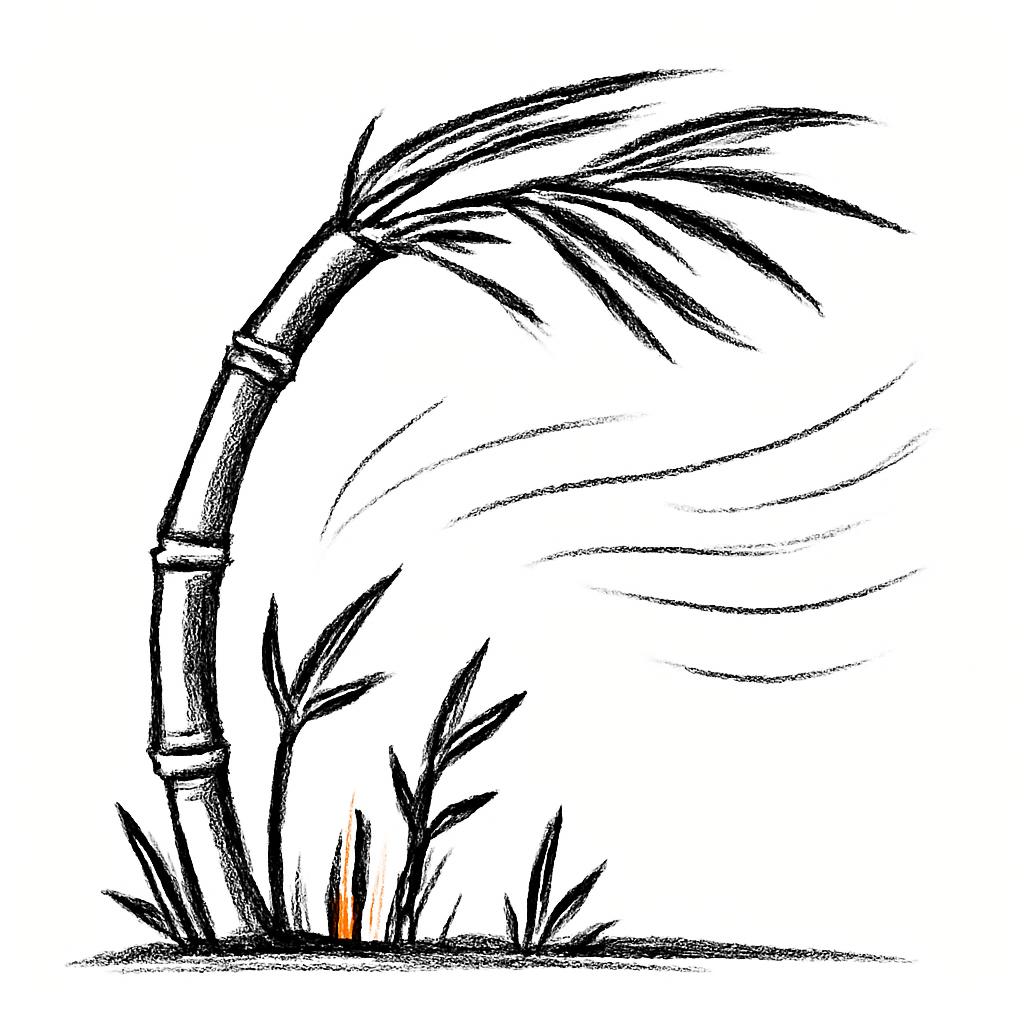
Nassim Taleb coined "antifragile" to describe a category that English doesn't have a word for. The trichotomy:
- Fragile: breaks under stress (a wine glass)
- Resilient: survives stress unchanged (a steel beam)
- Antifragile: gets stronger from stress (a muscle, an immune system)
Most people think the opposite of fragile is resilient. Taleb's point: there's another step beyond that. Some systems actually need stress to function well. Without exercise, muscles atrophy. Without exposure, immune systems weaken. Without competition, companies get soft.
For operators, the question isn't "how do we avoid all stress?" It's "are we built so that stress makes us better, or worse?"
Antifragile design looks like:
- Diversified bets where individual losses teach the system something
- Customer feedback channels that get sharper as more customers complain
- Cultures that openly study failures rather than punishing them
- Personal careers built on transferable skills, not on one specific role at one specific company
Fragile design looks like:
- Heavy optimisation for current conditions
- Single points of failure (one big customer, one supplier, one product)
- Just-in-time everything with no slack
- Brittle org structures that crack under any shock
The hard part: antifragile systems often look inefficient in calm times. Slack in the schedule, redundancy in suppliers, cash on the balance sheet. All look like waste during a good year. They're what lets you not just survive but actively benefit when the year goes sideways.
A related Taleb idea: hormesis. Small doses of stress make systems stronger, but huge doses still break them. Antifragility has a range. Lifting a weight you can almost handle builds muscle. Lifting a car ends your career. The discipline is finding the right level of stress, applied repeatedly, with recovery in between.
Practical takeaway: when you're considering a risk, ask which side of the line it falls on. Would this stress make us stronger or weaker? Is the magnitude in the hormesis range or the breaking range? Most companies never ask the first question and rarely ask the second.
Examples in the wild
Netflix deliberately breaks its own production servers (Chaos Monkey) to expose weaknesses. The system gets stronger by experiencing controlled stress. Most companies wait for the real outage and learn the same lesson at much higher cost.
Some hedge funds run 'long volatility' strategies that bleed small amounts during calm markets and gain hugely during crashes. They're explicitly antifragile to market chaos. Most investors are the opposite.
Strength training is literally controlled muscle damage. The recovery is what builds strength. Same logic applies to learning hard things, having difficult conversations, and most personal growth.
Antifragility is one of the mental models we apply through real cases inside the Pareto MBA — a part-time program for professionals who want to think clearly about business.