Wright's Law (the experience curve)
Unit cost falls a fixed percent with each doubling of cumulative production.
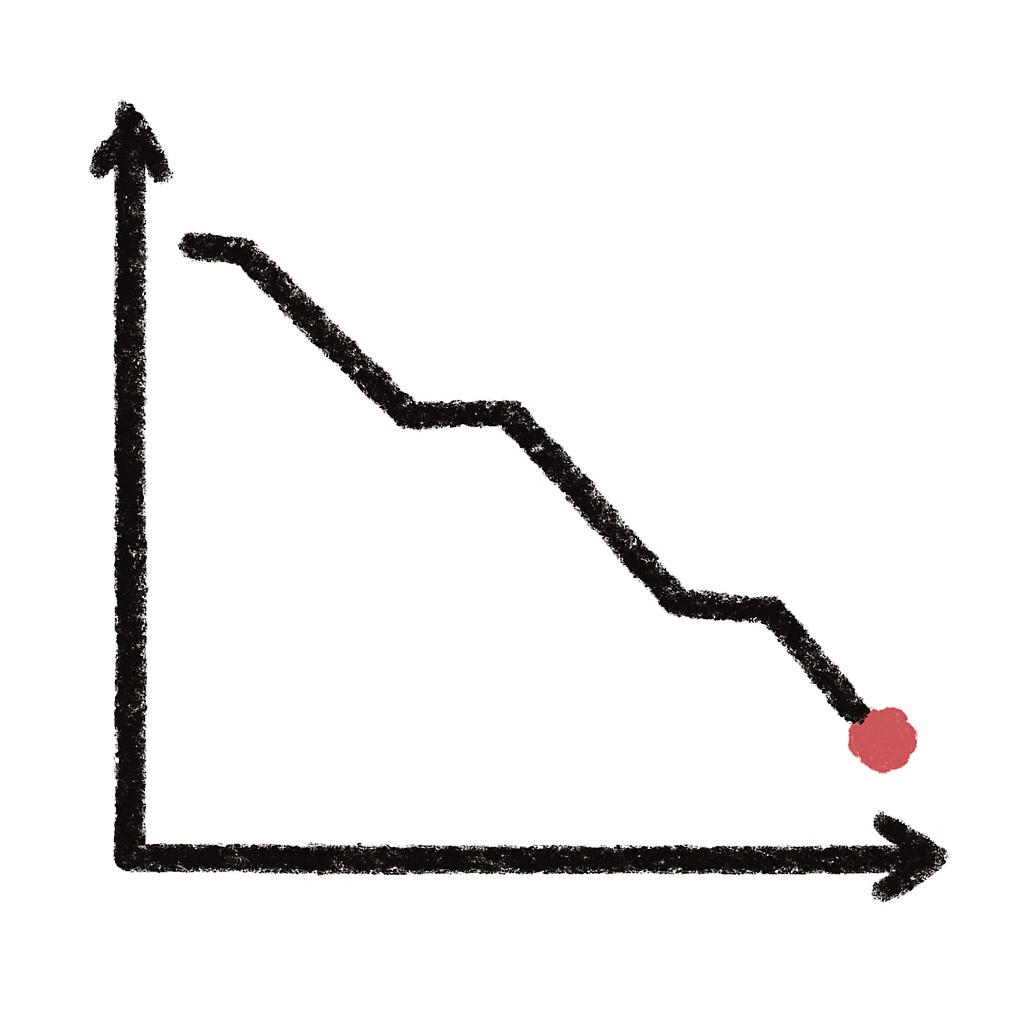
Theodore Wright, 1936, originally about aircraft. The cost of producing each unit of something falls by a predictable percentage (typically 15-25%) each time cumulative production doubles. The mechanism is learning, scale, and process improvement.
Wright's Law is often a better predictor of cost trajectories than Moore's Law in non-semiconductor industries. Solar panel costs follow Wright's Law cleanly. So do batteries, wind turbines, and most volume manufactured goods.
For operators, the implication is that volume matters not just for revenue but for cost position. Doubling production halves your distance to the next cost milestone. First-movers who ramp volume often build a cost moat that latecomers can't catch.
Examples in the wild
Tesla's bet on Gigafactory scale was a Wright's Law bet. By doubling battery production capacity earlier than competitors, they'd hit cost milestones years ahead.
Solar and battery cost curves have followed Wright's Law for 30+ years. Predicting where the cost would be in 10 years was straightforward given cumulative production projections.
Most personal skills follow a Wright's Law curve. Each doubling of practice time produces measurable improvement. Plateau happens past a point but the early curve is steep.
Wright's Law (the experience curve) is one of the mental models we apply through real cases inside the Pareto MBA — a part-time program for professionals who want to think clearly about business.