The streetlight effect
When you look where it's easy to look instead of where the answer actually is.
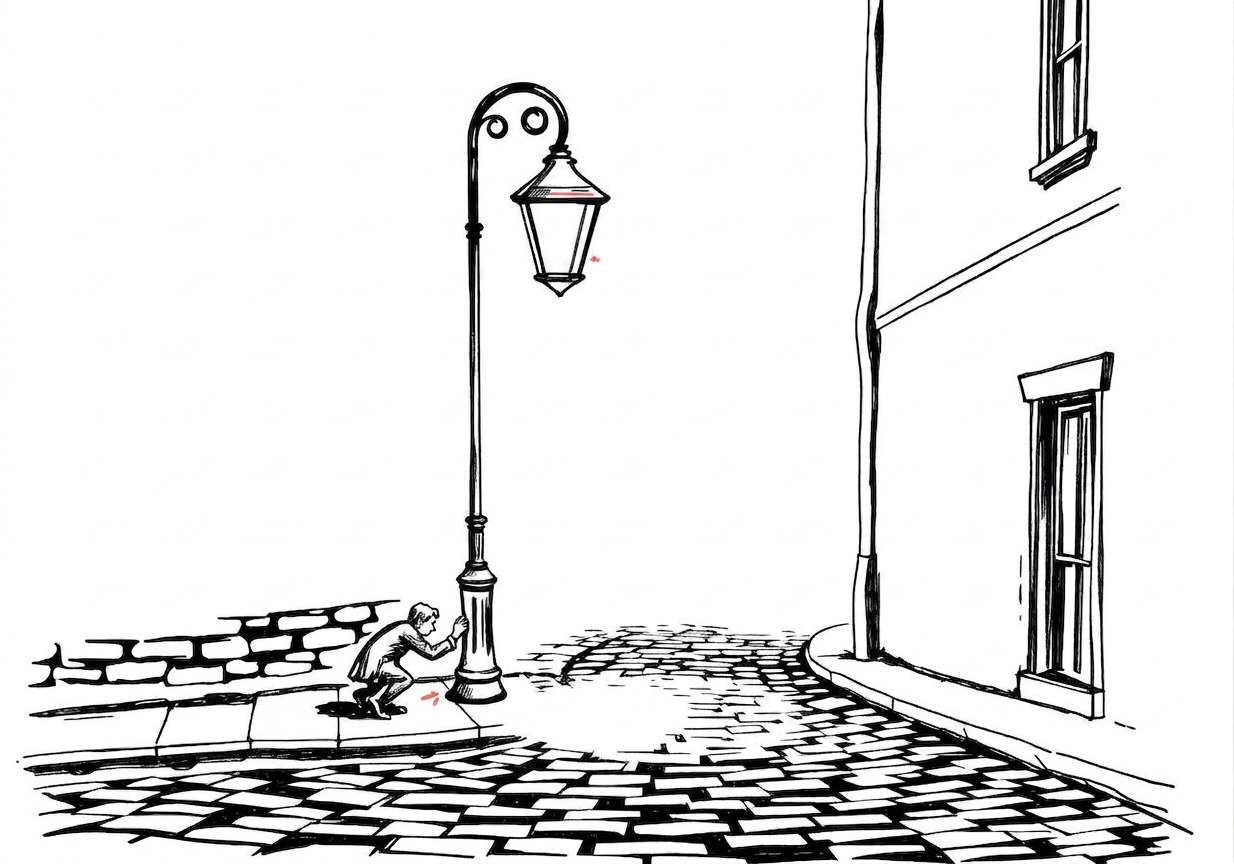
- When you look where it's easy to look instead of where the answer actually is.
- Operating: When investigating 'why is our customer churn high?', most teams look at data they have (NPS scores, ticket counts, usage logs).
- Investing: Quant funds analyse the data that exists in the formats it exists in.
- Everyday life: People who can't sleep tend to focus on what they can fix (their pillow, room temperature) rather than what they can't (stress at work, phone usage before bed).
A drunk man is searching for his keys under a streetlight. A police officer walks by and helps him look. After a while: "Are you sure you lost them here?" The man: "No, I lost them over there in the dark. But the light is better here."
The streetlight effect: when you have limited time or information, you tend to look where it's easy to look, not where the answer is. Sometimes the right move (looking somewhere is better than nowhere). Often a trap.
Where this shows up:
- Companies measure what's easy to measure (clicks, headcount, revenue) rather than what matters (impact, judgment, customer satisfaction). The numbers they care about are the numbers they can count, even when the numbers they can count don't actually drive the business.
- Job interviews focus on whatever the candidate has documented (resume, prior titles, school). Hard-to-measure things (judgment, character, taste) get ignored. The hire often goes badly because the actual job depends on the hard-to-measure things.
- Medical research is disproportionately done on rats because rats are accessible. The findings often don't transfer to humans.
- Investigations focus on what produced an audit trail. The real cause of the problem may have left no record because the cause was a conversation, a culture, or a missing process.
The defence isn't to abandon the streetlight. Looking under the streetlight is usually better than not looking at all. The defence is to be honest about where the streetlight is, and to consciously try to look in the dark too, even though it's harder.
A useful checklist for any major question:
- What information do I have? (under the streetlight)
- What information am I missing? (in the dark)
- Is the answer more likely to be under the streetlight or in the dark?
- If in the dark, what would it cost to bring a flashlight there?
The fourth question is the operative one. Sometimes the cost of investigating the dark area is too high (interviewing all the customers who churned, getting in front of all the regulators, doing the slow physical inventory). But you should at least know what it would cost before you decide to give up.
A related observation: people who consistently look in the dark tend to outperform people who only look under streetlights. Quants who study weird datasets that nobody else studies. Investigative journalists who knock on doors instead of running database queries. Investors who travel to physical locations instead of reading 10-Ks. Effort in the dark is rare, which is part of why it pays.
Examples in the wild
When investigating 'why is our customer churn high?', most teams look at data they have (NPS scores, ticket counts, usage logs). The real answer is usually in conversations with customers who already left, which is data nobody has on hand. Streetlight all the way.
Quant funds analyse the data that exists in the formats it exists in. Things that don't show up in standard datasets (management quality, regulatory risk, cultural rot) get systematically underweighted. Sometimes that's exactly where the alpha is.
People who can't sleep tend to focus on what they can fix (their pillow, room temperature) rather than what they can't (stress at work, phone usage before bed). The fixable things are under the streetlight.
The streetlight effect is one of the mental models we apply through real cases inside the Pareto MBA — a part-time program for professionals who want to think clearly about business.