Power laws
Distributions where outliers dominate. No meaningful average.
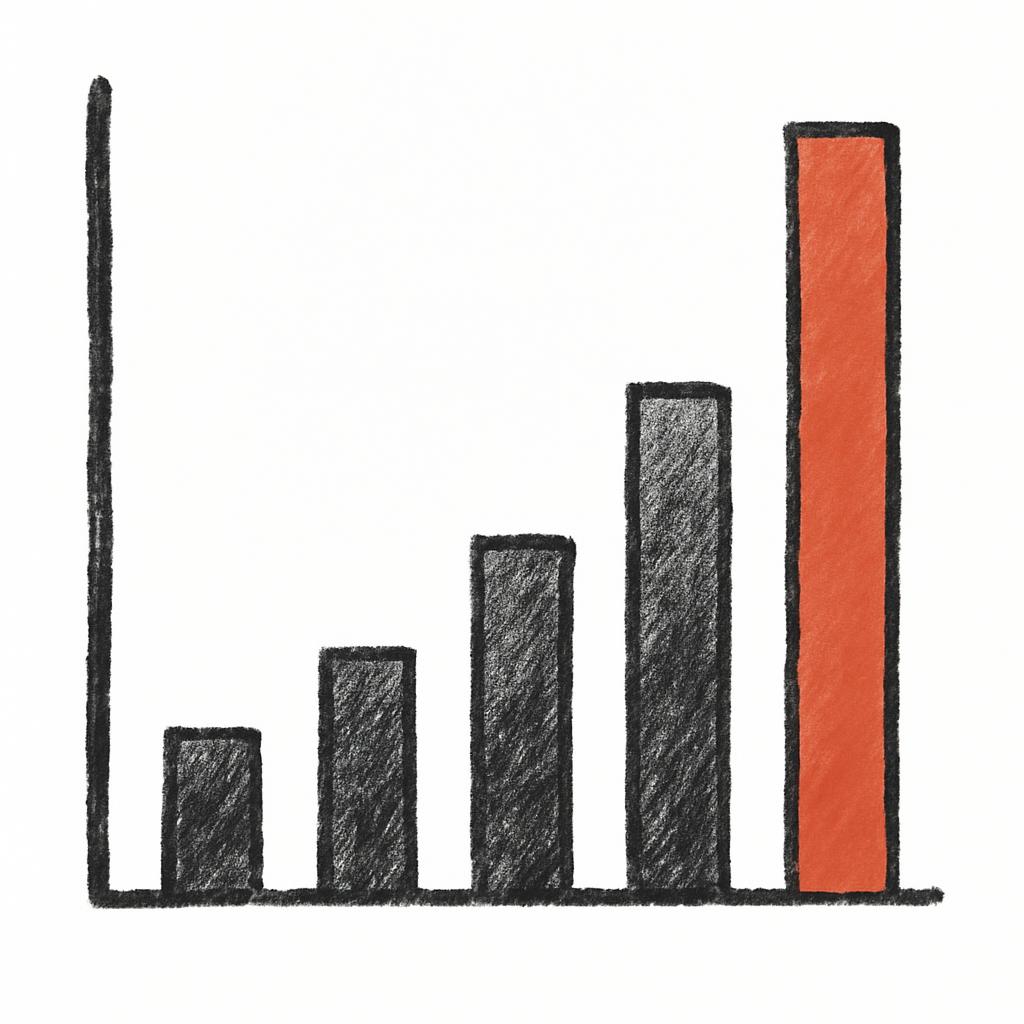
A power law is a distribution where one quantity scales as a power of another. The defining feature for operators: there's no "typical" observation. The biggest examples are wildly bigger than the median, and they hold most of the total.
Earthquakes follow a power law (most are small, the big ones dwarf the small ones combined). So do city sizes, wealth, book sales, war casualties, viral content, and venture capital returns. In all of these, average is a misleading number. The median is much smaller than the mean. The top few percent hold the majority of everything.
For operators, the implications are large:
- In power-law markets, being #1 or #2 is worth vastly more than being #5
- In power-law portfolios (VC, hits-driven media, drug pipelines), one big hit pays for many failures
- In power-law revenue distributions, the top customers matter wildly more than the rest
Apply normal-distribution intuitions to power-law phenomena and you'll consistently underestimate concentration and underprepare for outliers.
Examples in the wild
Top employees in most knowledge-work roles produce 5-10x the output of median employees. Standard HR systems assume something closer to linearity. The mismatch costs companies their best people.
VC fund returns are dominated by one or two investments per fund. Sequoia's WhatsApp return paid for the fund several times over. Without that one, the fund would have been mediocre.
Most of your friendships have moderate importance. A few are wildly more important. Treating them as equivalent (equal time, equal effort) gets the math wrong.
Power laws is one of the mental models we apply through real cases inside the Pareto MBA — a part-time program for professionals who want to think clearly about business.