Newton's third law (reciprocity)
Every action provokes an equal and opposite reaction.
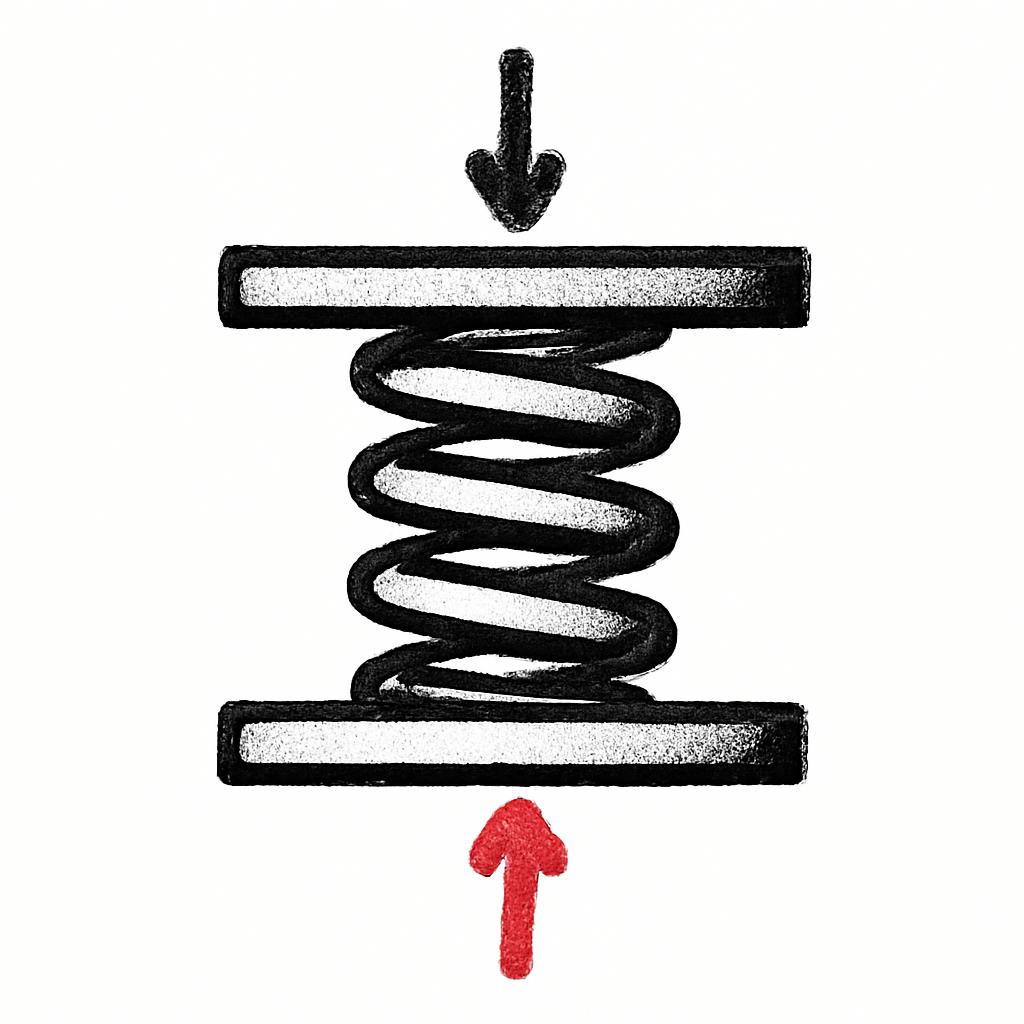
In mechanics, this is literally true. Push a wall, the wall pushes back with the same force. The principle generalises remarkably well to human systems. Every social action provokes a reaction. Every policy provokes adjustment. Every move provokes a countermove.
The bias most operators carry is thinking only about the action and ignoring the reaction. They lower prices and don't model the competitor response. They tighten a rule and don't model the workaround. They cut costs and don't model the resulting employee behaviour.
For operators, the discipline is to ask, before any meaningful action: "what's the equal and opposite reaction here?" Most strategies improve when the reaction is modelled, not just the action.
Examples in the wild
Most price wars start because one party lowers prices to gain share, assuming competitors won't match. They always match. The Newton's third law step is always there; just often ignored.
Activist investor campaigns usually trigger management defences (poison pills, buybacks, public counter-campaigns) of roughly the same scale as the original attack. The third law shows up in every governance fight.
Aggressive parenting usually triggers proportional teenage rebellion. The third law works in households too.
Newton's third law (reciprocity) is one of the mental models we apply through real cases inside the Pareto MBA — a part-time program for professionals who want to think clearly about business.