The long tail
Digital distribution makes the aggregate of many niche products rival or exceed the few hits.
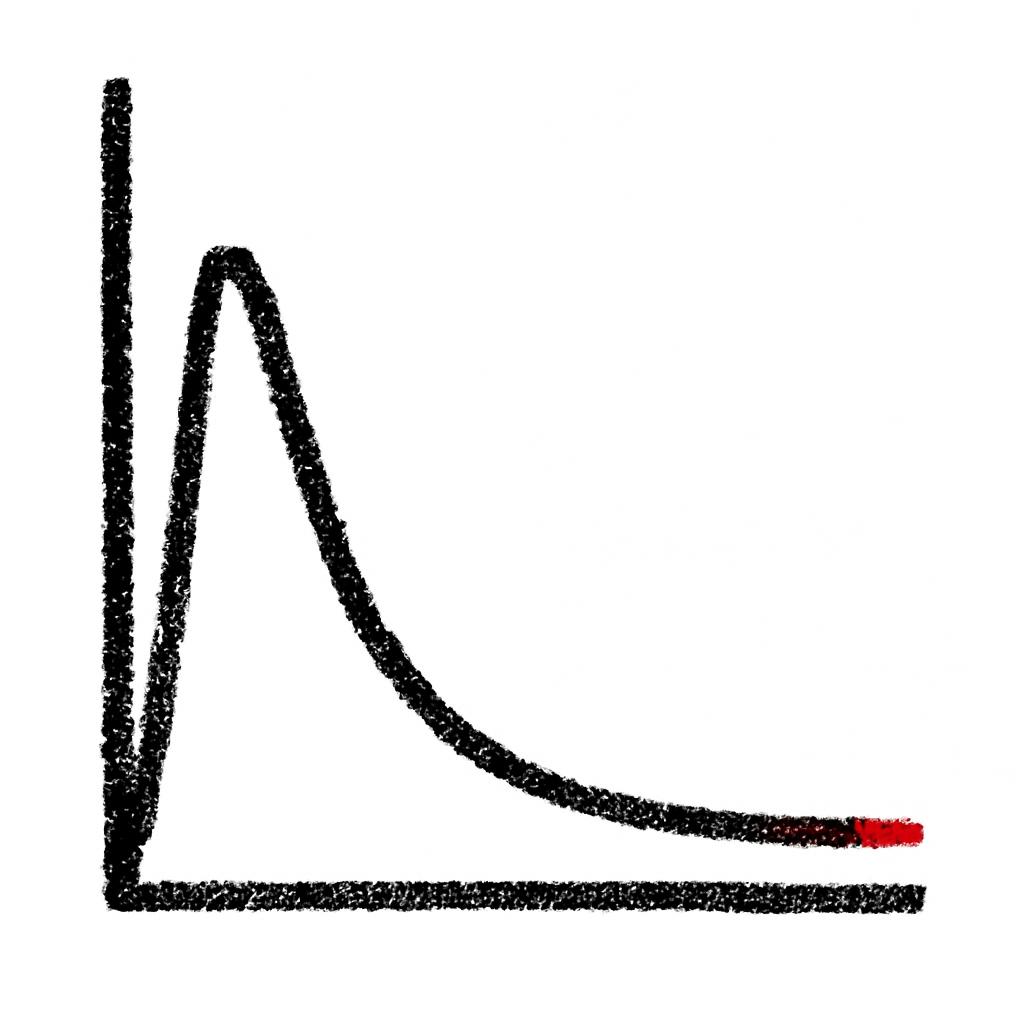
Chris Anderson, 2004. Traditional retail (limited shelf space) forced focus on hits. Digital distribution (unlimited shelf space) makes it economic to carry niche products too. The aggregate of the long tail can exceed the head.
Amazon proved this in books. Netflix proved it in entertainment. Spotify proved it in music. The platforms that capture the long tail beat the ones that only stock the hits, because the long tail is collectively bigger.
For operators, the long tail matters whenever distribution costs collapse. Niche audiences become economically viable. Specialists beat generalists. The strategy of "serve the 90% well" gives way to "serve every niche profitably."
Examples in the wild
Vertical SaaS companies often have long-tail economics. Each niche industry isn't huge, but collectively they exceed the big horizontal market.
Investment platforms that aggregate small accounts (Robinhood, Interactive Brokers) make money on the long tail of small traders. The traditional model focused on whales.
Long-tail content (niche YouTube channels, niche podcasts) has created careers for tens of thousands of people who couldn't have existed in the broadcast era.
The long tail is one of the mental models we apply through real cases inside the Pareto MBA — a part-time program for professionals who want to think clearly about business.