Kantian fairness tendency
We expect and demand reciprocal fair dealing, and react badly to its violation.
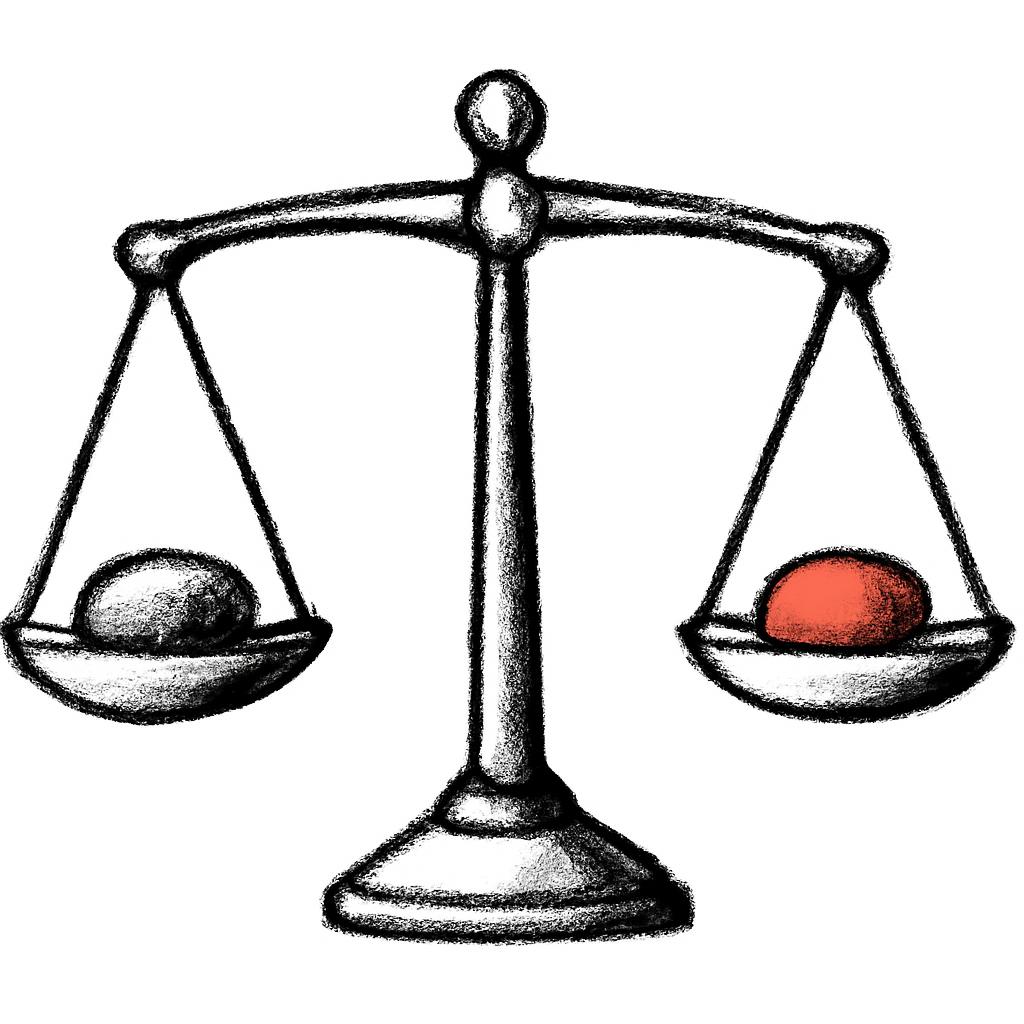
Humans have a strong instinct for fairness, even at personal cost. We'll punish unfair treatment of others (the ultimatum game), refuse to take low offers we'd be irrationally better off accepting, and feel rage at violations even when no material harm has occurred.
The bias is mostly useful: it's the substrate of most successful human cooperation. Violation gets punished, so cooperation is sustained. But it can become destructive when it overrides actual material interest, or when the perception of fairness is manipulable.
For operators, fairness perception is a load-bearing part of every team, customer relationship, and partnership. Compensation that's mathematically fair but feels unfair (asymmetric in some specific way) gets worse outcomes than less mathematically optimal but more obviously even-handed schemes.
Examples in the wild
Pay disclosure inside companies frequently triggers fairness reactions even when the math is defensible. The discovery that a junior peer earns 10% more triggers more rage than rational analysis would predict.
Founders who feel cheated by early investors often refuse later rounds with those investors even when terms are good. The fairness violation outweighs the financial calculation.
Most family disputes about inheritance are about fairness perception, not the absolute amounts involved. The narcissism of small differences in legacy matters enormously.
Kantian fairness tendency is one of the mental models we apply through real cases inside the Pareto MBA — a part-time program for professionals who want to think clearly about business.