Hyperbolic discounting
We irrationally over-value immediate rewards. Our preferences reverse as the moment approaches.
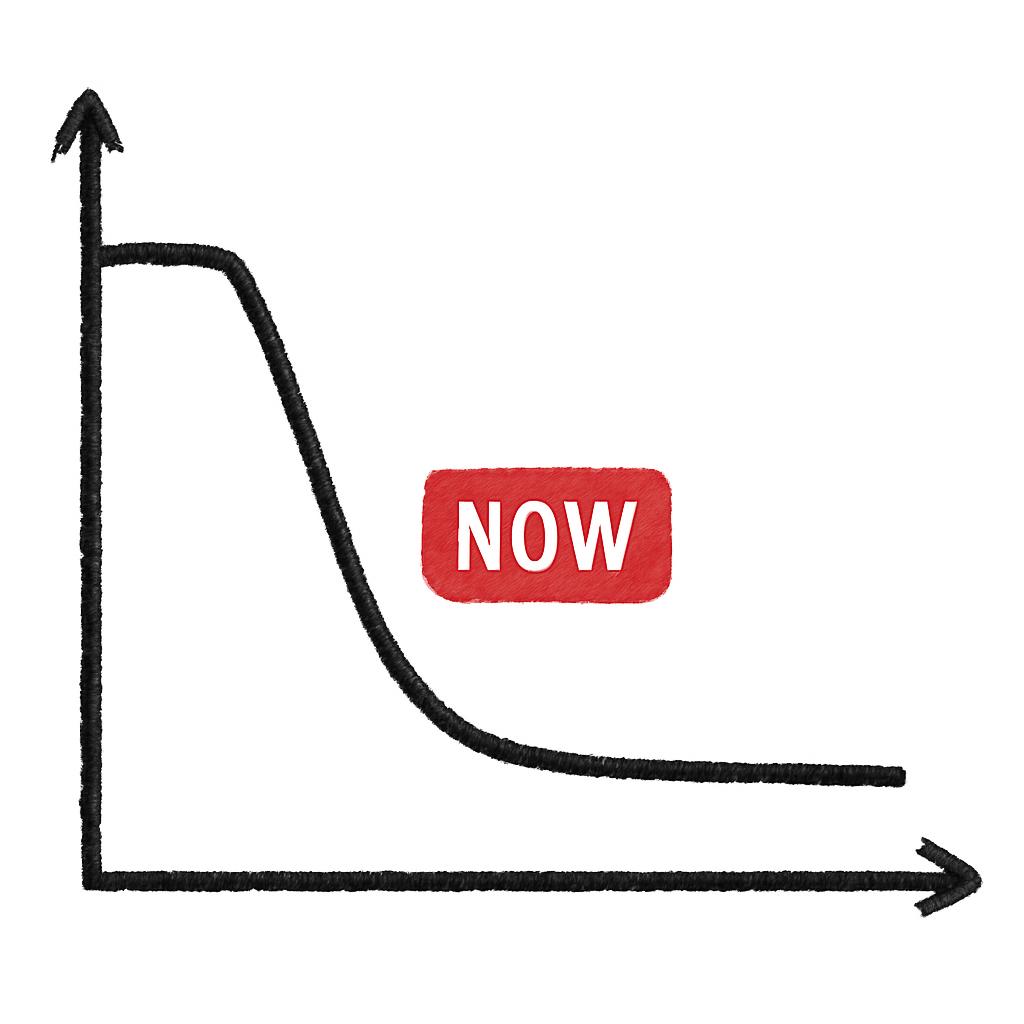
A finding from behavioural economics. Standard utility theory predicts exponential discounting: the value of a future reward declines smoothly with time. Humans don't behave that way. We heavily discount even small immediate delays (would you wait a day for $10 vs. $11?) but discount very little between distant alternatives (would you wait a year and a day for $10 vs. a year for $11?).
The result is preference reversal. You decide today that next month you'll start a diet. Next month arrives, the immediate cost is real, and you defer again. The choice between two future rewards looked clear; the choice between the immediate and the slightly-future doesn't.
For operators, hyperbolic discounting explains procrastination, the difficulty of long-term saving, and why most strategic plans fail at execution. The discipline is to commit to future actions in ways that can't easily be reversed when the moment arrives.
Examples in the wild
Strategic plans that depend on consistent quarterly execution often fail. The plan was made when each quarter's tradeoff felt small. Each quarter, the immediate pressure looks larger than the long-term goal.
Most retail investors sell winners too early and hold losers too long. Both are hyperbolic patterns: the immediate gain feels valuable; the immediate pain of locking in a loss feels too costly.
Diet, exercise, savings, and most virtues require constant resistance against the hyperbolic discount. The future you wants the result; the present you doesn't want the cost.
Hyperbolic discounting is one of the mental models we apply through real cases inside the Pareto MBA — a part-time program for professionals who want to think clearly about business.