Conway's Law
A company's products end up looking like its org chart.
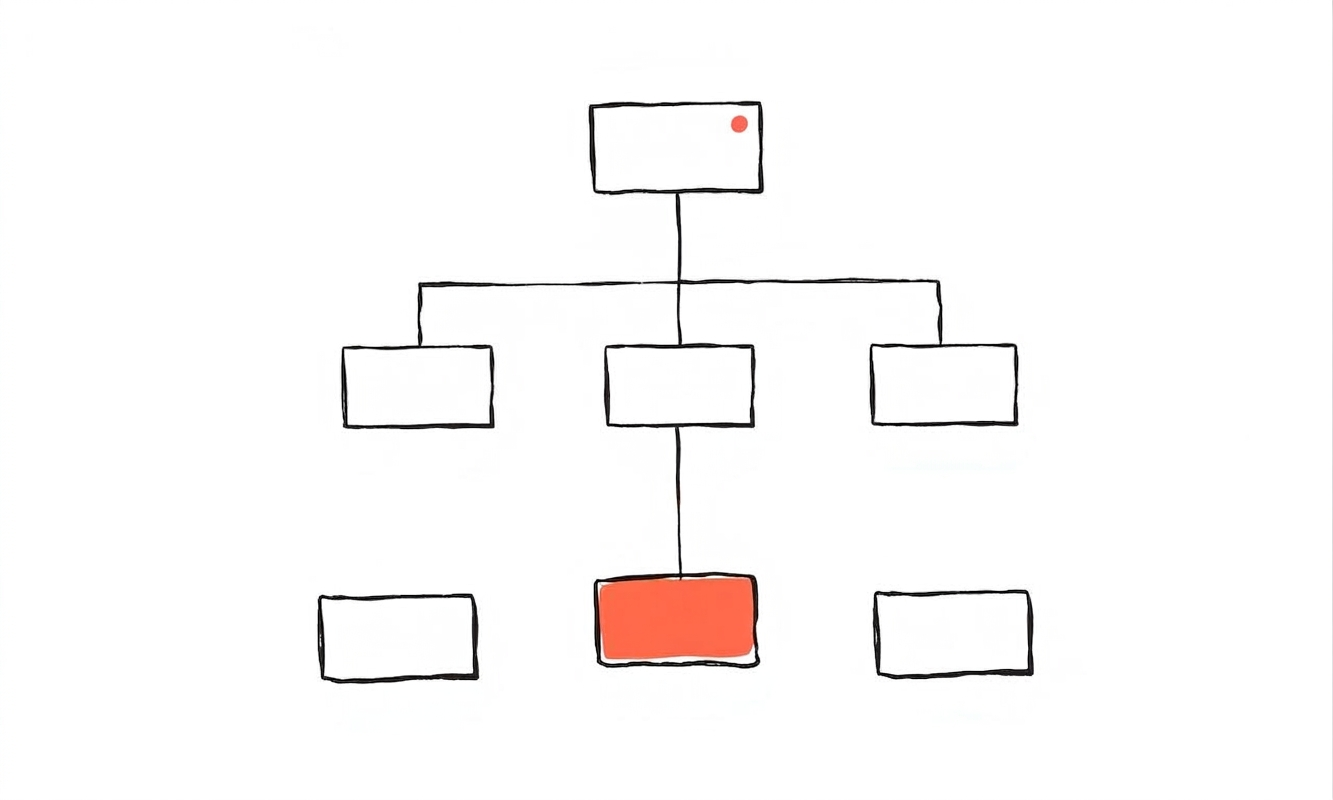
- A company's products end up looking like its org chart.
- Operating: Why does the iPhone feel like one device while Android feels like a coalition of vendors? Conway's Law.
- Investing: When evaluating a company, look at the product, then look at the org chart.
- Everyday life: A family that doesn't communicate well builds a house with awkward layouts.
Melvin Conway wrote this in 1968: "Organisations which design systems are constrained to produce designs which are copies of the communication structures of these organisations."
In plain English: a company's products end up looking like the company's org chart.
A two-team company builds two-module products. A company with separate backend and frontend teams builds products with a sharp seam between backend and frontend. A company where the sales team doesn't talk to the engineering team builds products where the sales pitch doesn't match what the product does. The communication structure of the company gets baked into the product.
This was originally about software, but it generalises to almost any complex thing a company produces. The customer experience. The brand. The internal documents.
Why does it happen? Because people who don't communicate well can't design integrated things together. The seams in the org become seams in the product because the seams in the org are where information doesn't flow.
There's a more recent version called the "Inverse Conway Maneuver": if you want a particular product architecture, design your organisation to mirror it. Want a microservices product? You need small autonomous teams. Want a single coherent integrated product? You need a single team that owns the whole thing.
For operators evaluating any company (internally or externally): - Look at the product. Look at the org chart. The seams in the product will often map exactly to the political boundaries inside the company. - If the customer experience is awkward at a particular transition (sign-up to onboarding, sales to delivery, product to support), the same transition probably exists between teams that don't communicate well. - Fixing the product without fixing the org rarely works. The product seams will reappear within months.
Examples in the wild
Why does the iPhone feel like one device while Android feels like a coalition of vendors? Conway's Law. Apple's hardware, software, and design teams have always reported to one person. Google, Samsung, and Qualcomm don't.
When evaluating a company, look at the product, then look at the org chart. The seams in the product usually map to the political boundaries inside the company. A bad org structure tells you the product will keep being awkward in predictable places.
A family that doesn't communicate well builds a house with awkward layouts. The kitchen doesn't quite connect to the dining room because the spouse who designed the kitchen never talked to the one who designed the layout.
Conway's Law is one of the mental models we apply through real cases inside the Pareto MBA — a part-time program for professionals who want to think clearly about business.