Bets and returns
Every meaningful business decision is a bet with a thesis.
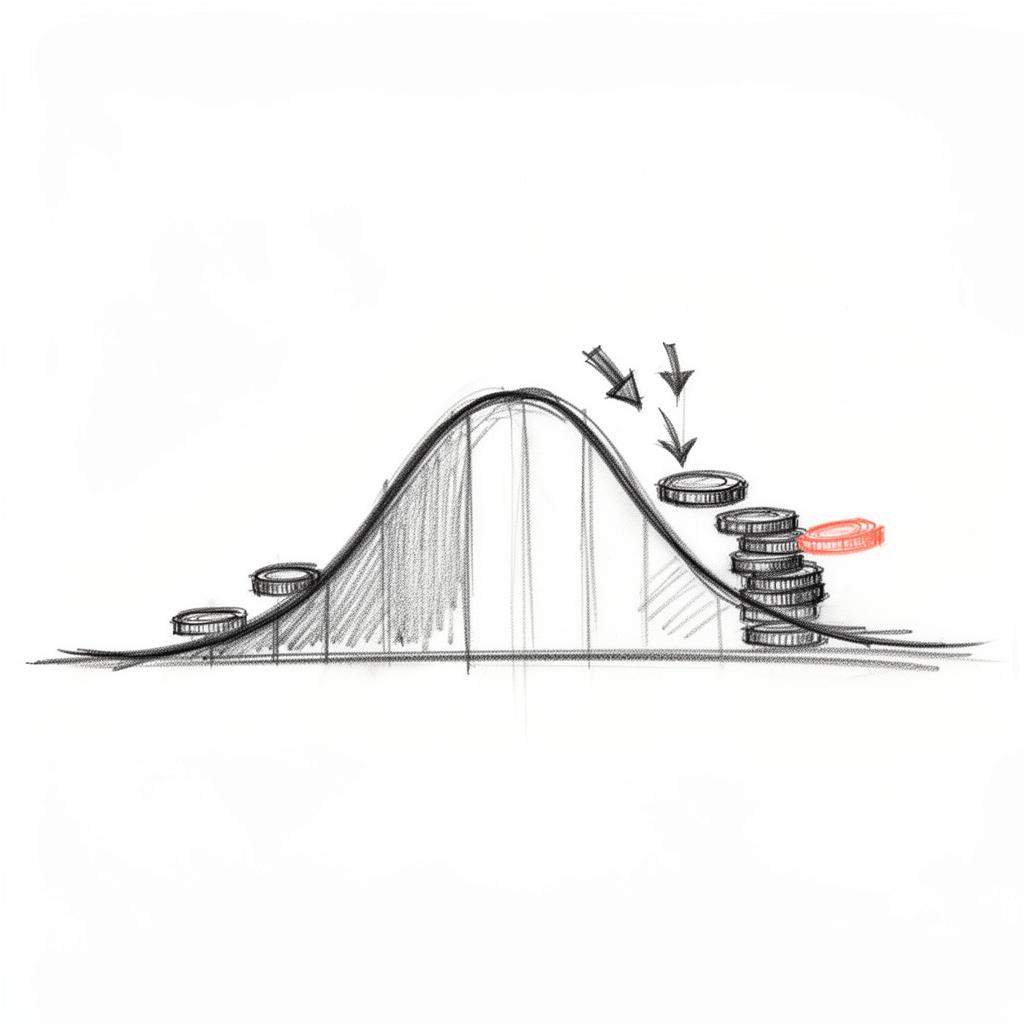
- Every meaningful business decision is a bet with a thesis.
- Operating: Building a billion-dollar factory to consolidate manufacturing is an irreversible bet.
- Investing: Sequoia's investment in WhatsApp was a $60M bet that ended up returning roughly $3B.
- Everyday life: Quitting your job to start a company is a bet.
Annie Duke (a former poker pro turned decision-science writer) makes the point well: most business decisions feel like analytical exercises but are actually bets. You're committing cost or risk now in exchange for a return you can't be sure of.
Once you see decisions this way, three things change.
First, you stop confusing good decisions with good outcomes. A bet with 70% odds is a good bet, even if the 30% scenario actually happens. The opposite is also true: someone who took a 10% bet and got lucky didn't make a smart decision, they made a smart-looking decision. Most performance reviews and most board conversations confuse these two things constantly.
Second, you start asking "what's the thesis?" Every meaningful bet has a thesis: a one-sentence answer to the question "why is this a good idea?" If you can't state the thesis, you don't actually have a bet. You have a hope. Hope isn't a strategy.
Third, you start sizing bets to their odds. A bet with high conviction and high upside gets more capital than a bet with low conviction and similar upside. This sounds obvious until you watch companies allocate equal budget to every initiative because each VP fought for their piece.
The other thing about bets is reversibility. Some bets are easy to undo (a marketing campaign, a hire on a 3-month contract). Some are not (a $1B factory, an acquisition, a public commitment). Irreversible bets need higher conviction than reversible ones. Jeff Bezos calls reversible decisions "two-way doors" and irreversible ones "one-way doors," which is a useful frame.
The practical question I ask myself before any meaningful decision: "What am I accepting now, in exchange for what later? How confident am I in the trade? And what would I do if I'm wrong?"
If you can't answer those three questions, the decision isn't ready to be made.
Examples in the wild
A manufacturer building a single billion-dollar factory to consolidate production is an irreversible bet. Thesis: industrial scale becomes a structural moat. If wrong, the company is stuck with capacity it can't fully use.
Sequoia's investment in WhatsApp was a $60M bet that ended up returning roughly $3B. The thesis was simple (network effects in messaging are unusually powerful). The size of the bet was sized to the conviction.
Quitting your job to start a company is a bet. Stating the thesis ('I'm willing to give up 2 years of income for a 10% chance at a 20-year career outcome') makes the trade-off concrete instead of romantic.
Bets and returns is one of the mental models we apply through real cases inside the Pareto MBA — a part-time program for professionals who want to think clearly about business.