Theory of constraints
Every system has one bottleneck. Improving anything else is wasted effort until you fix the bottleneck.
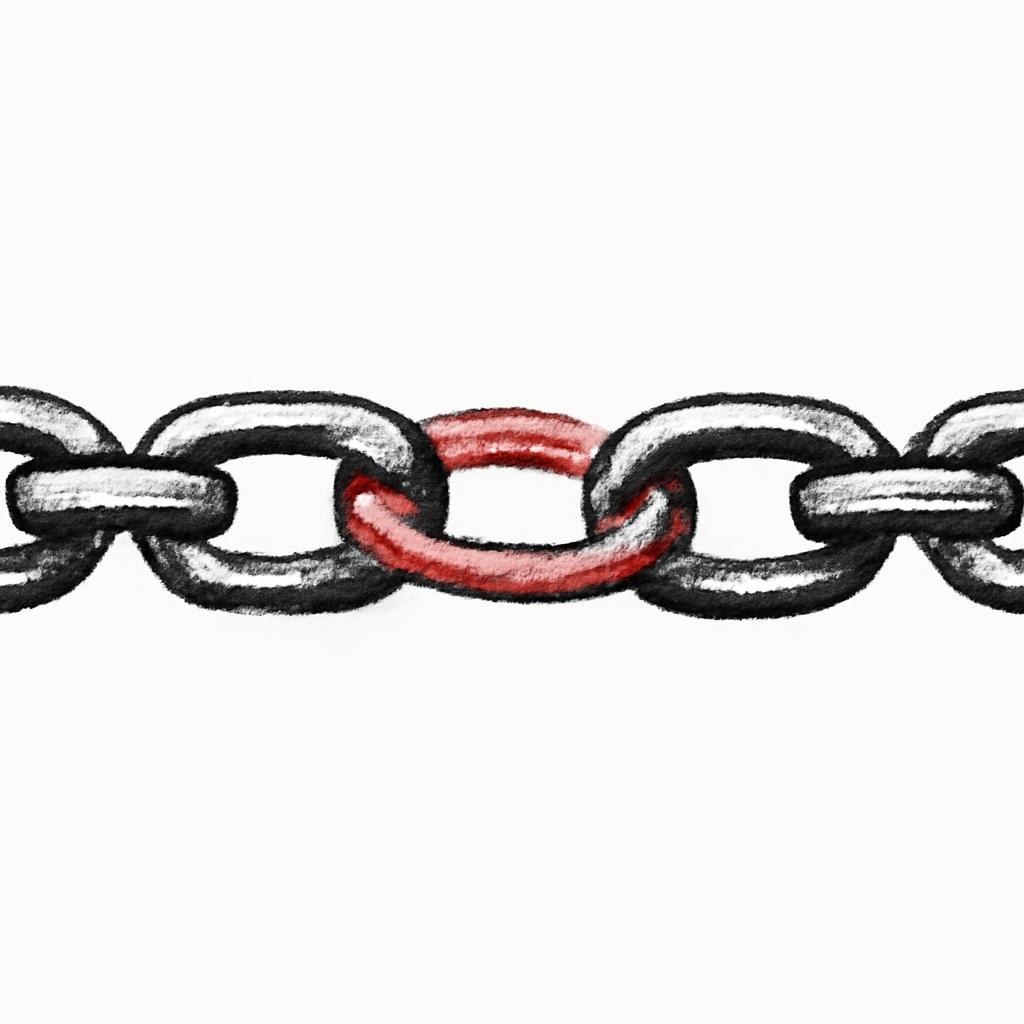
Eliyahu Goldratt's book "The Goal" (1984) is one of the most-read business books for a reason. The insight: complex systems are limited by their tightest constraint, not by the average of their components. Speeding up everything except the bottleneck doesn't help.
The metaphor (from the book): a Boy Scout troop on a hike. The pace of the whole group is set by the slowest scout, Herbie. If you tell everyone else to walk faster, the group spreads out but doesn't actually arrive any earlier. The way to help the group is to help Herbie. Lighten his pack, put him in front, let him set the pace.
In business:
- A factory's output is limited by its slowest machine. Optimising the others is wasted effort.
- A sales team's output is limited by the rep with the lowest close rate (if leads route equally).
- A team's velocity is limited by the slowest decision-maker.
- A product's growth is limited by the worst part of the customer journey.
The discipline (Goldratt's five steps): 1. Identify the bottleneck. Often non-obvious. Look for queues forming upstream, or people always at maximum capacity. 2. Decide how to exploit it. Get maximum throughput from the bottleneck in its current state. 3. Subordinate everything else to the bottleneck. Other parts of the system shouldn't run faster than the bottleneck can absorb. 4. Elevate the bottleneck. Invest in expanding its capacity. 5. Once it's fixed, find the new bottleneck. There's always a new one. Don't let inertia leave the old one in place after it's no longer the constraint.
Common mistakes:
- Optimising the easy thing instead of the actual bottleneck. Cosmetic improvements get made because they're cheap, not because they help.
- Treating bottlenecks as fixed. Most can be expanded with the right intervention.
- Adding capacity in the wrong place. More marketing spend when the bottleneck is delivery. More engineering when the bottleneck is product decisions.
- Not noticing when the bottleneck shifts. It usually does once you fix the previous one.
How to find the actual bottleneck:
- Look for where queues form. Work piling up upstream of something is a sign.
- Look for where people are always busy with no slack
- Look at the data on throughput at each step of the process
- Ask the team. They usually know which step is the constraint. Managers often disagree because the bottleneck isn't where they want it to be.
A related principle: until you fix the bottleneck, any other improvement is theatre. It may feel productive. It doesn't change the output of the system.
Examples in the wild
Many startups have a bottleneck in either sales (can't sell enough) or delivery (can't fulfil what they sold). Pouring marketing dollars in when sales is the bottleneck just creates more frustrated, leaky leads. Pouring engineering in when delivery is the bottleneck creates better products that customers still don't get on time.
A company growing revenue 100% but with operating expenses growing 150% has a unit-economics bottleneck. The growth narrative looks great. The constraint says the business model isn't fit. Until the bottleneck moves, more growth makes things worse, not better.
A team that can't get anything done usually has one bottleneck: one person whose approval everything routes through. Removing or duplicating that bottleneck transforms productivity. The team often won't say so directly because the bottleneck is usually senior.
Theory of constraints is one of the mental models we apply through real cases inside the Pareto MBA — a part-time program for professionals who want to think clearly about business.