Randomness
Much of the world is noise. We manufacture false patterns from it.
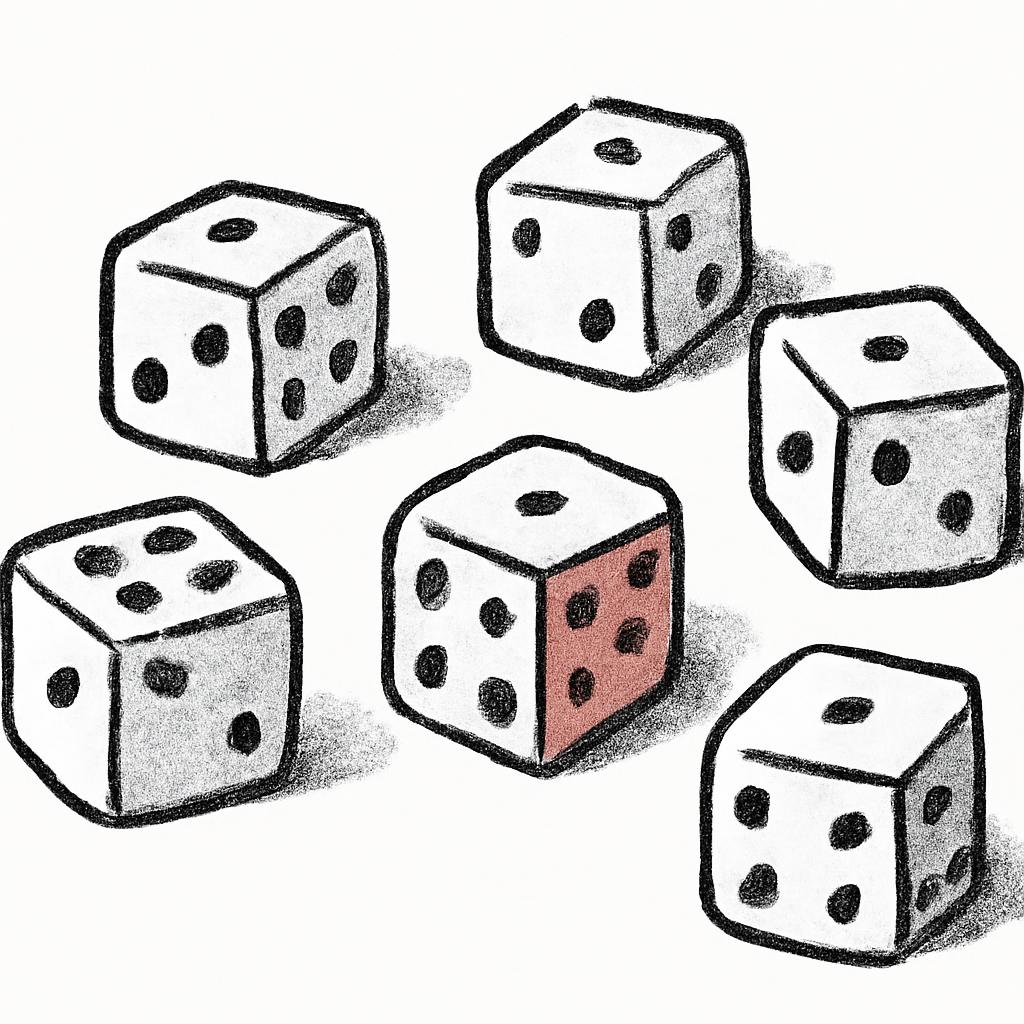
Humans are pattern-matching machines. We see faces in clouds, fortunes in stock charts, and causation in coincidence. The bias is useful (most of the time, the pattern is real) but it produces a steady stream of false positives.
Many of the patterns we confidently identify in life, business, and markets are random fluctuation that happens to look meaningful in hindsight. The "hot hand" in basketball was famously found to mostly be statistical illusion. Most short-term performance differences in finance are random.
For operators: assume that any pattern you see in a small dataset is mostly random until proven otherwise. Test patterns by asking what would happen if you saw the data from a different period, or from a different sample, or with the labels shuffled. Genuine patterns survive. Random ones don't.
Examples in the wild
Quarter-to-quarter sales variation is mostly noise. Reading patterns into it ("our pipeline is heating up") produces management oscillation. The signal is usually in the trend over many quarters.
Day-to-day market moves are almost entirely random. The financial news industry exists to manufacture causal stories for noise.
Lucky streaks at the casino, the gym, in dating are mostly random. The streaks that look like skill usually aren't, unless they persist much longer than expected.
Randomness is one of the mental models we apply through real cases inside the Pareto MBA — a part-time program for professionals who want to think clearly about business.